
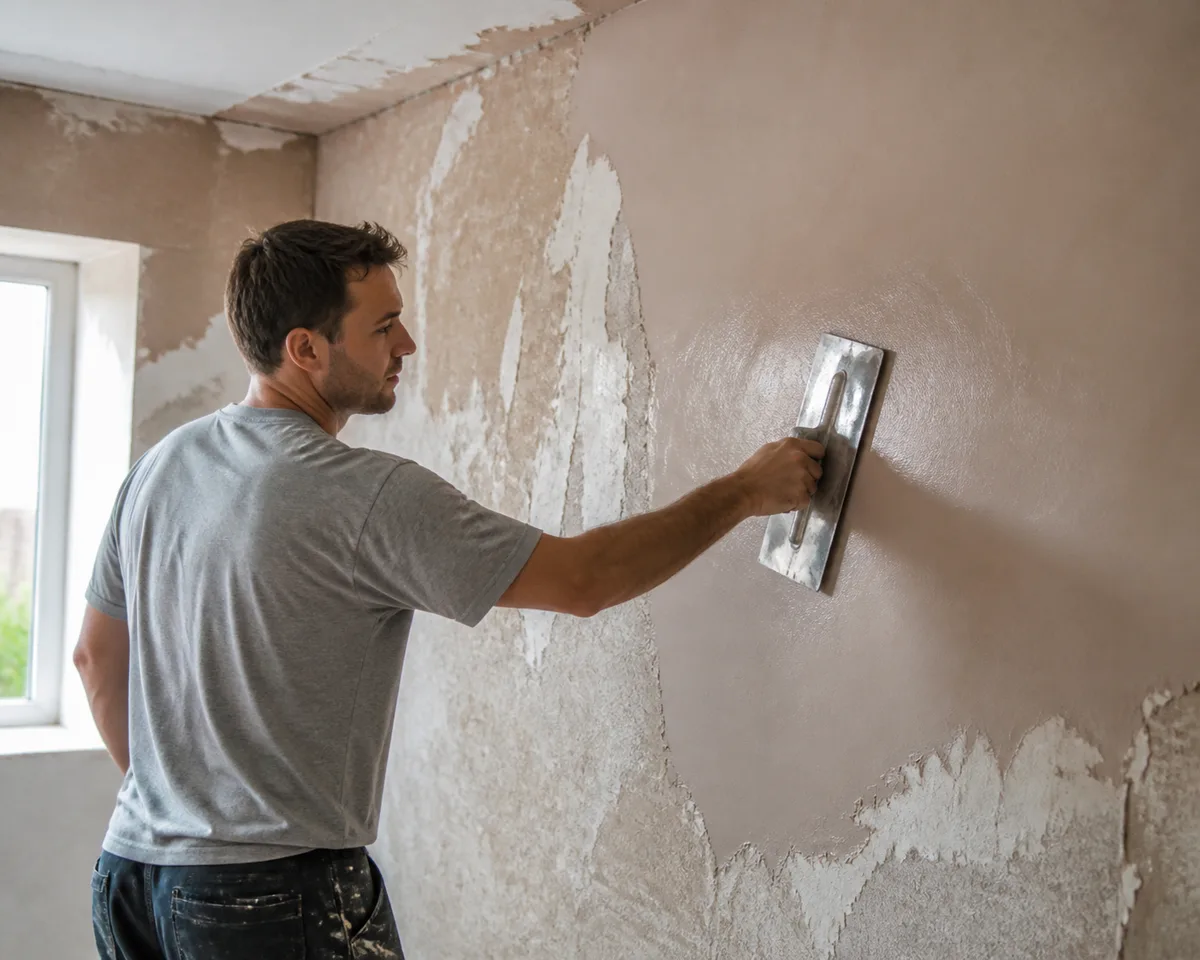
The skimming plaster price you pay depends on a handful of factors — but you can get a realistic number before you call anyone. This guide covers the 2026 South African price ranges for skimming walls and ceilings, what affects the final cost, and when skimming is the right choice over full plastering.
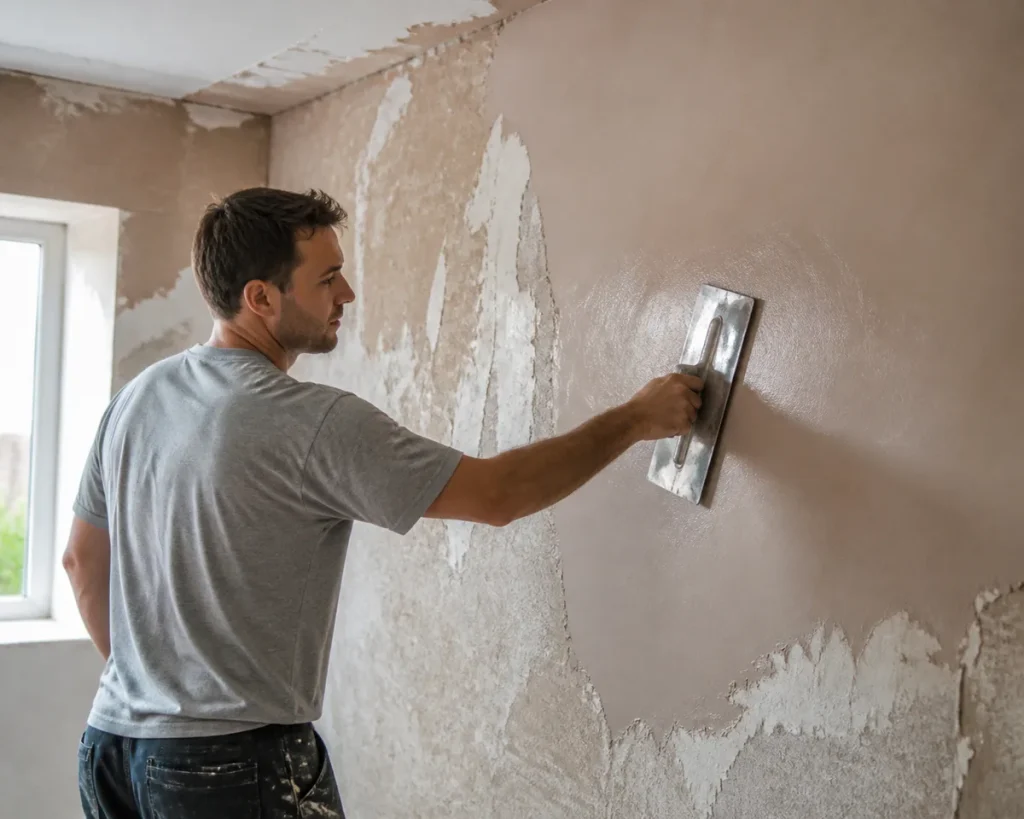
What is skimming plaster and when do you need it?
Skimming plaster is a thin (2–6 mm) finishing layer applied over an existing plastered surface. It covers hairline cracks, textured walls, and uneven patches to create a perfectly smooth, paint-ready finish. It is faster and cheaper than full replastering because you are not rebuilding the wall — you are just smoothing the surface that is already there.
You need skimming when:
- Walls have a rough, textured or “popcorn” finish you want to remove
- There are minor cracks or pitting across the surface
- You want a paint-grade smooth finish for high-sheen paints
- Ceilings have hairline cracking from normal movement
- You are renovating an older home and the walls need refreshing
You need full replastering (not skimming) when the existing plaster is hollow, damp, crumbling, or there is no existing plaster at all.
Skimming plaster price per m² in South Africa (2026)
These are verified 2026 price ranges from South African industry sources including servicelinksa.co.za and localpros.co.za. They are ranges — your actual quote depends on the area, wall condition, height, and access.
| Service | Labour only | Labour + materials |
|---|---|---|
| Wall & ceiling skimming | R40–R80/m² | R140–R180/m² |
| Skim over existing plaster | R50–R90/m² | R150–R190/m² |
| Ceiling skim only | R45–R85/m² | R145–R185/m² |
| Patch skimming (minor repairs) | — | R500–R1,200 flat rate |
Cape Town and Bellville specifically run slightly higher than the national average: R155–R195 per m² for labour and materials. This reflects higher labour costs and coastal demand for salt-resistant plaster mixes.
Ready for a quote? Contact I.B.S Construction — we cover all of Cape Town and quote free of charge.
What drives the skimming cost?
Not every job costs the same. Here are the main factors that move the skimming plaster price up or down:
- Surface condition: Sound plaster in good condition costs less to skim than heavily cracked or textured walls that need more preparation.
- Height: Walls above 3 m or vaulted ceilings need scaffolding, which adds R800–R2,000 per day for hire.
- Area: Larger jobs have lower effective cost per m² — a single small room costs more per metre than a whole-house job.
- Materials: Premium finishing plasters like Rhinolite cost more than standard gypsum products but give a better result on difficult surfaces.
- Access: Tight spaces, staircases and narrow rooms slow the work and increase the labour cost.
Always get your quote itemised. You want to see: preparation, primer, skim coat application, and any materials listed separately. That way there are no surprises when the invoice arrives. Plaster and skim products are covered by standards published by the South African Bureau of Standards.
For more on our plastering and skimming work, see our skimming services page.
Skimming vs full plastering: which do you need?
This is the most common question homeowners ask before they call us. The answer is simple:
| Skimming | Full plastering | |
|---|---|---|
| Thickness | 2–6 mm | 10–20 mm |
| Best for | Smoothing existing plaster | New brickwork or badly damaged walls |
| Cost (all-in) | R140–R195/m² | R180–R260/m² |
| Time | Faster | Slower (scratch coat must cure first) |
| Mess | Less | More |
If your walls are structurally sound and just need a smoother finish, skimming is the right call. It is cheaper, faster and less disruptive.
Read more about how we handle wall preparation: skimming plaster — what it is and why it matters.
How to get an accurate skimming quote in Cape Town
To get an accurate price, a plasterer needs to see the job. A photo helps, but a site visit gives a real number. Here is how to prepare:
- Know your rough wall area (length × height of each wall you want skimmed)
- Note any problem areas: cracks, patches, textured sections
- Mention ceiling height — anything over 2.7 m affects access
- Ask whether the quote includes priming and surface preparation
- Get at least two or three quotes and compare them itemised
I.B.S Construction provides free, no-obligation quotes across Cape Town. We inspect the surface before we price — no guesswork, no surprises. Get your skimming quote today.
Ceiling skimming: what to expect
Ceiling skimming follows the same principles but costs slightly more per m² because of the overhead work. Cape Town’s older homes often have ceilings with hairline cracking from building movement. These are cosmetic cracks — skimming fills and levels them for a clean finish.
For ceilings with Rhinolite or other gypsum board, a sealer coat (RhinoSeal or equivalent) is needed before skimming to prevent adhesion failure. A good plasterer will identify this during their site visit and include it in the quote. We cover this further in our guide to plastering vs skimming.
See our full guide: ceiling skimming Cape Town — cost and process.
Frequently asked questions
How much does skimming plaster cost per m² in South Africa?
Skimming plaster costs R40–R80 per m² for labour only, or R140–R195 per m² for labour and materials. In Cape Town specifically, expect R155–R195 per m² all-in. Patch skimming for small repairs is typically R350–R1,200 as a flat rate. Source: servicelinksa.co.za, localpros.co.za (2026). Our guide to smooth wall finish goes into this properly.
What is the difference between skimming and plastering?
Plastering is a full application of sand-and-cement render to brickwork, usually 15–20 mm thick. It costs R90–R160 per m² all-in. Skimming is a thin finishing coat (2–6 mm) applied over existing plaster to create a smooth, paint-ready surface. It costs R50–R90 per m² and is much faster. Use plastering for new walls; use skimming to smooth existing walls. If you are weighing that up, our guide to skim coat is worth a read.
How long does skimming a room take?
A standard bedroom or living room (20–30 m²) typically takes one to two days. This includes surface preparation, applying the skim coat and allowing it to dry. Ceiling skimming may take longer because of the overhead work. Your plasterer can give you a project-specific timeline. We cover this further in our guide to skimming plaster builders.
Do I need to repaint after skimming?
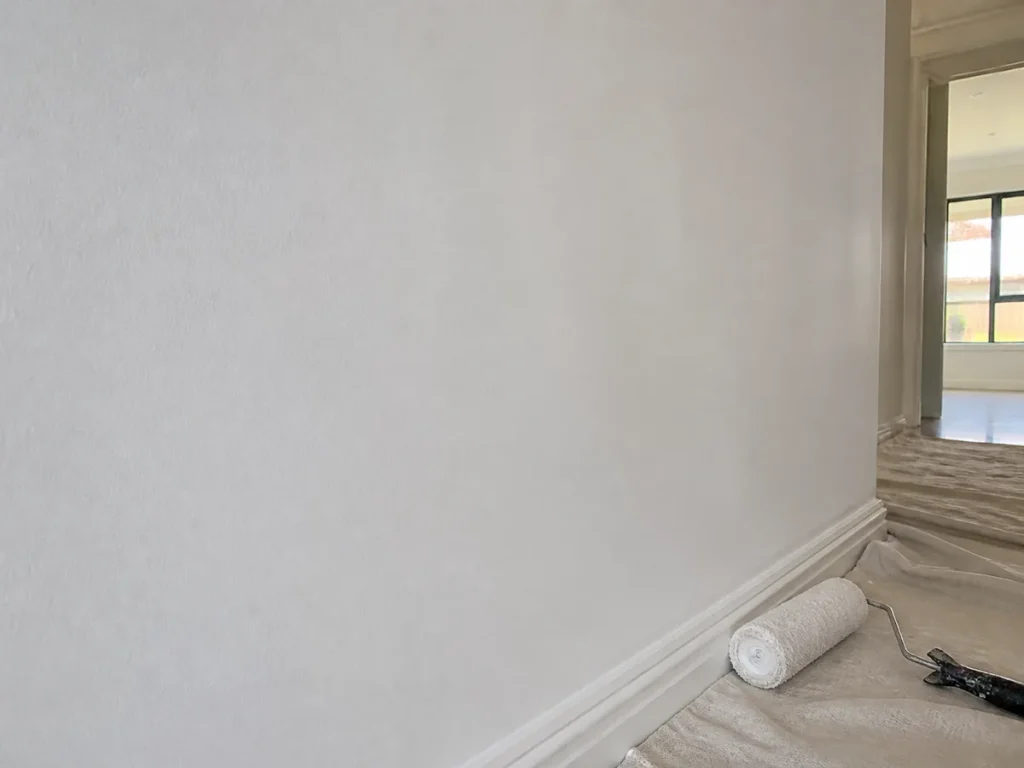
Yes. Skimmed surfaces must be primed and painted. New skim plaster is porous and will absorb paint unevenly if you skip the primer coat. A PVA diluted primer or purpose-made plaster primer seals the surface and gives you an even final paint finish. There is more detail in our piece on uneven wall repair.
Can you skim over existing painted walls?
Yes, in most cases. The surface needs to be sound (no loose paint or flaking), clean, and primed with a bonding agent or PVA wash before skimming. Very glossy or oil-based painted surfaces may need light sanding first. A professional will assess the surface and advise before starting. We cover this further in our guide to rhinolite plastering.
Frequently asked questions
How much does skimming plaster cost per m² in South Africa?
Skimming plaster costs R40–R80 per m² for labour only, or R140–R195 per m² for labour and materials. In Cape Town specifically, expect R155–R195 per m² all-in. Patch skimming for small repairs is typically R350–R1,200 as a flat rate. Source: servicelinksa.co.za, localpros.co.za (2026). There is more detail in our piece on skimming plaster 40kg.
What is the difference between skimming and plastering?
Plastering is a full application of sand-and-cement render to brickwork, usually 15–20 mm thick. It costs R90–R160 per m² all-in. Skimming is a thin finishing coat (2–6 mm) applied over existing plaster to create a smooth, paint-ready surface. It costs R50–R90 per m² and is much faster. Use plastering for new walls; use skimming to smooth existing walls. For the full picture, see our article on skimming walls.
How long does skimming a room take?
A standard bedroom or living room (20–30 m²) typically takes one to two days. This includes surface preparation, applying the skim coat and allowing it to dry. Ceiling skimming may take longer because of the overhead work. Your plasterer can give you a project-specific timeline.
Do I need to repaint after skimming?
Yes. Skimmed surfaces must be primed and painted. New skim plaster is porous and will absorb paint unevenly if you skip the primer coat. A PVA diluted primer or purpose-made plaster primer seals the surface and gives you an even final paint finish.
Can you skim over existing painted walls?
Yes, in most cases. The surface needs to be sound (no loose paint or flaking), clean, and primed with a bonding agent or PVA wash before skimming. Very glossy or oil-based painted surfaces may need light sanding first. A professional will assess the surface and advise before starting.