
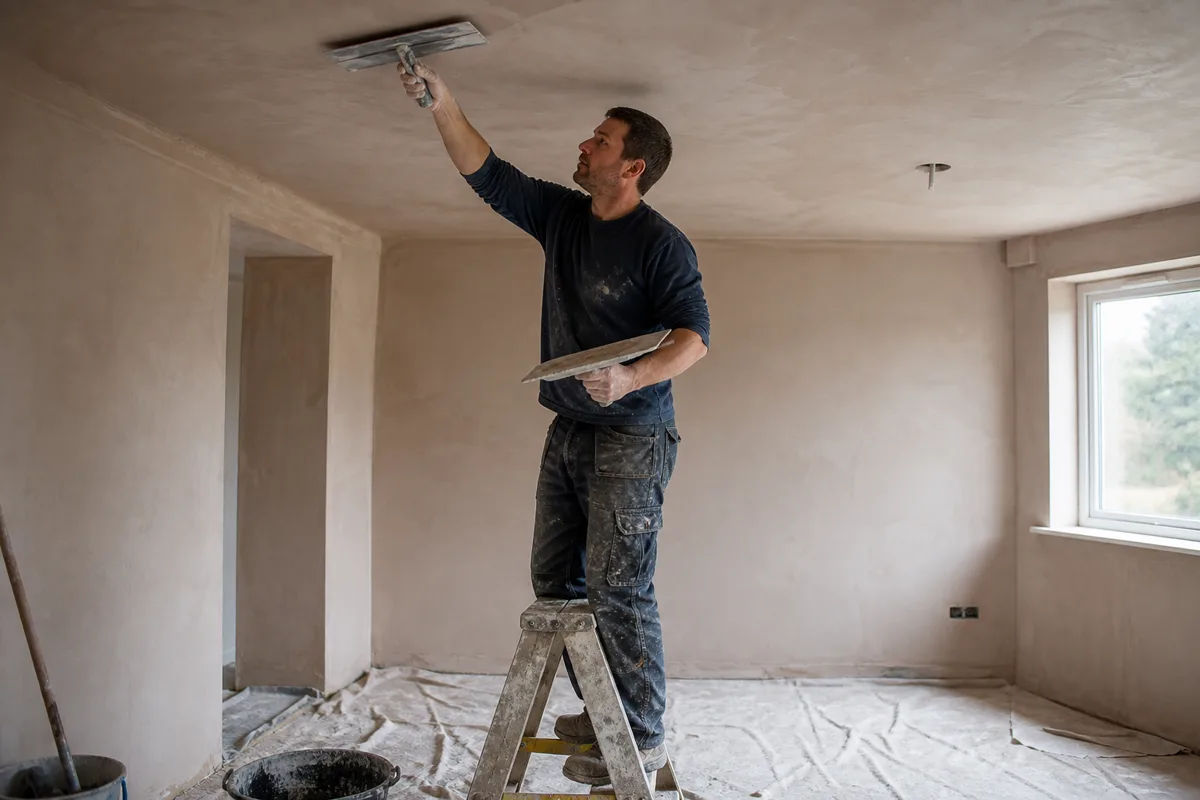
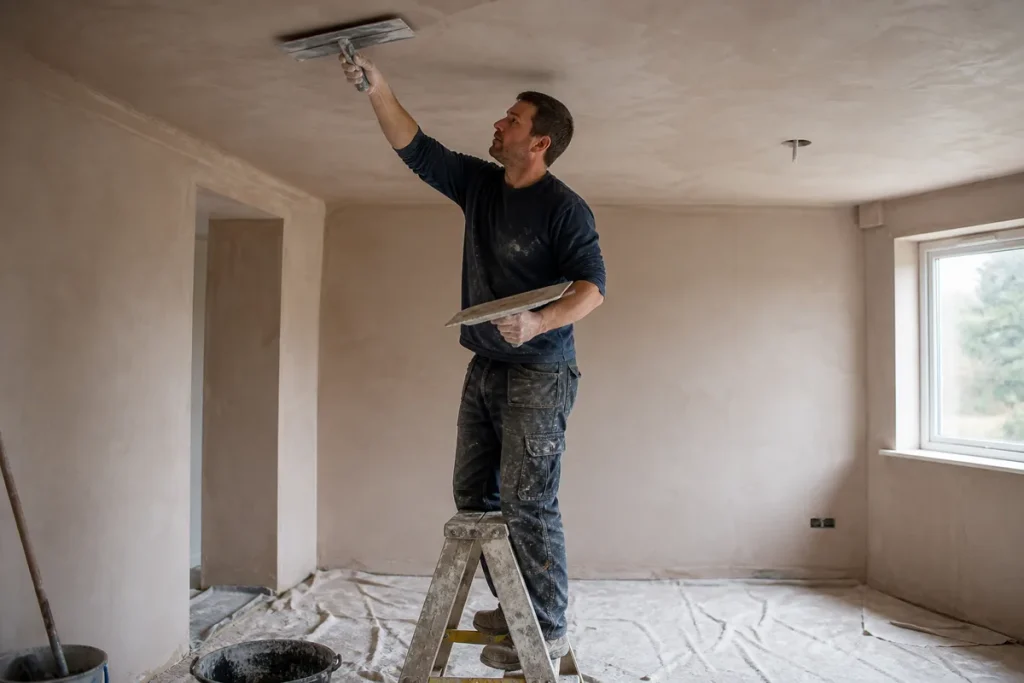
Ceiling skimming costs R145 to R185 per square metre including materials in South Africa in 2026. In Cape Town and Bellville expect R155 to R195. Labour only, if you supply materials, runs R45 to R85 per square metre.
Skimming is the cheap way to rescue a tired ceiling. It is not always the right answer though, and knowing the difference saves you from paying twice.
What ceiling skimming actually is
Skimming means applying a thin plaster coat — usually 2 to 3mm — over a surface that is already sound. It fills fine cracks, hides old texture and leaves a smooth, paint-ready finish.
It is not the same as plastering. New plaster goes on at 10 to 15mm, usually straight onto brickwork. Skimming only ever refreshes a surface that is structurally fine underneath.
Ceiling skimming cost per m²
- Labour only: R45 to R85 per m²
- Labour and materials: R145 to R185 per m²
- Cape Town and Bellville: R155 to R195 per m²
- Skim over existing plaster: R150 to R190 per m²
- Patch skimming, small repairs: R500 to R1,200 as a flat rate
A standard 4m x 4m bedroom ceiling is 16m². At Cape Town rates that is roughly R2,500 to R3,100 including materials. Add access costs if the ceiling is high or the room is full of furniture.
When ceiling skimming is the right call
Skimming works when the ceiling itself is sound and only the surface is tired.
- Old textured or stippled finishes you want gone
- Fine hairline cracks with no movement behind them
- Minor patch damage after removing a light fitting
- Boards in good condition but with visible joints
When to replace the ceiling instead
Skimming over a failing ceiling just hides the problem for a season. Replace rather than skim if you see:
- Sagging or bowing boards
- Water staining that is still spreading
- Boards that flex or sound hollow when pushed
- Cracks that keep reopening after being filled
Water staining is the one to take seriously. A stain means water arrived from somewhere, and skimming over it without fixing the source is money burnt. Find the leak first — usually a roof or waterproofing problem — then deal with the ceiling.
A full replacement ceiling costs more: H-strip gypsum runs R150 to R250 per m², and a rhinolite skimmed ceiling R300 to R500 per m². Removing the old ceiling adds R50 to R100 per m².
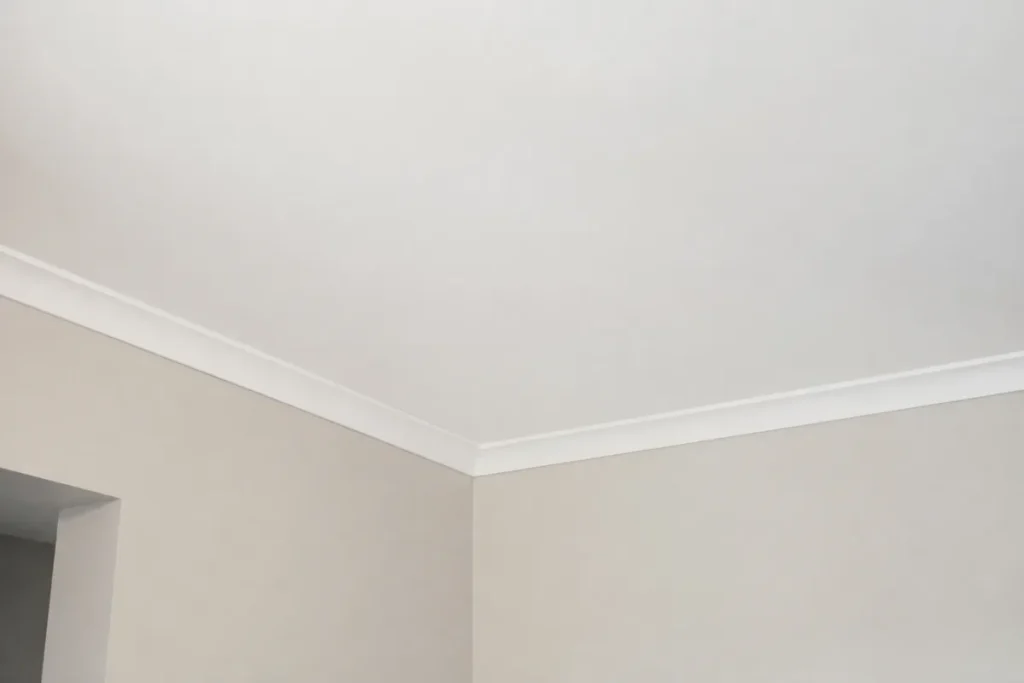
The ceiling skimming process, step by step
- Clear and protect. Furniture out or covered, floors sheeted. Skimming is messy work.
- Prepare the surface. Clean off dust, scrape loose material, sand any glossy areas.
- Prime. A bonding agent so the skim grips. Skipping this is the single most common cause of failure.
- First coat. Thin and even, worked into the surface.
- Second coat. Applied once the first has firmed up, then trowelled flat.
- Polish and dry. Final trowel pass, then leave it alone.
Ceilings are harder than walls. Everything is overhead, gravity works against the plasterer, and any dip shows up the moment a light is switched on. It is the main reason ceiling rates sit slightly above wall rates.
Drying time before painting
A fresh skim needs time before paint. Allow at least seven days for a thin skim coat in normal conditions, and longer in a cold, damp Cape Town winter. Plaster and skim products are covered by standards published by the South African Bureau of Standards.
Paint applied too early traps moisture, and you get patchy sheen or peeling within months. If the job is part of a bigger painting project, build the drying time into the schedule rather than compressing it.
Skimming over rhinolite and painted ceilings
Both are possible, with the right preparation.
Over rhinolite: the surface must be sealed first so it does not draw moisture out of the new skim too fast. Skip that and the skim dries unevenly and cracks.
Over paint: only if the paint is sound and well stuck. Gloss must be sanded to give a key, and the whole surface primed. Any paint that is already flaking has to come off — a skim will not hold onto a surface that is itself letting go.
If the ceiling and walls both need work, doing them together is cheaper than two visits. Our wall and ceiling skimming page covers the full service, and you can send us the room measurements for a written quote.
Frequently asked questions
How much does ceiling skimming cost in South Africa?
R145 to R185 per square metre for labour and materials in 2026, rising to R155 to R195 in Cape Town and Bellville. Labour only, where you supply materials, is R45 to R85 per square metre. A standard 16m² bedroom ceiling works out at roughly R2,500 to R3,100 installed.
How thick should each skim coat be?
A skim coat goes on at about 2 to 3mm, usually in two thin passes rather than one thick one. Anything thicker is plastering, not skimming, and needs a different approach. Applying a skim too thickly causes it to crack as it dries because the surface sets before the material underneath.
Should you skim a ceiling or replace it?
Skim if the boards are sound and only the surface is tired — old texture, hairline cracks, visible joints. Replace if the boards sag, flex when pushed, or show spreading water stains. Skimming over a failing ceiling hides the problem for a season and you pay twice.
Can you skim over a painted ceiling?
Yes, provided the paint is sound and firmly attached. Glossy paint must be sanded to give the skim something to grip, and the whole surface needs priming with a bonding agent. Any paint already flaking or peeling has to be removed first, because a skim cannot hold onto a surface that is letting go itself.
How long before you can paint a newly skimmed ceiling?
Allow at least seven days in normal conditions, and longer through a cold, damp Cape Town winter. Painting too early traps moisture in the skim, which shows up as patchy sheen or peeling within a few months. If the room is part of a bigger repaint, schedule the drying time in rather than rushing it.