
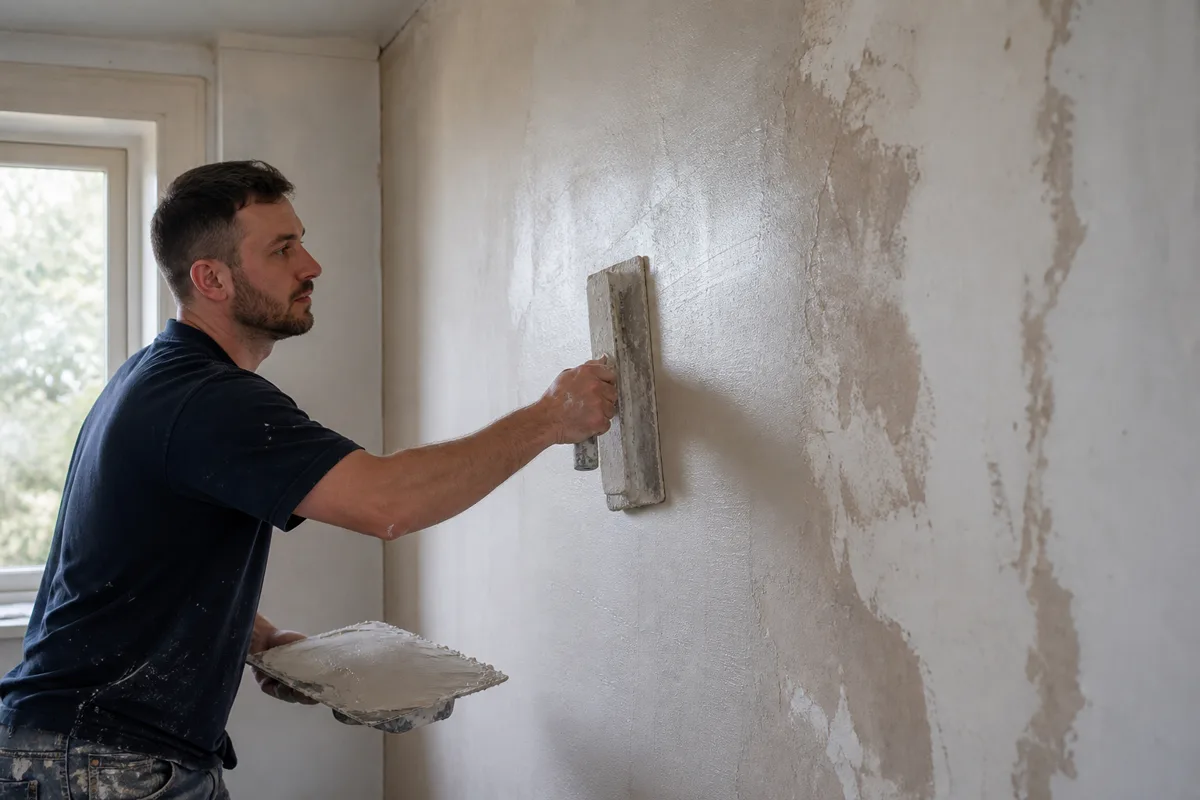
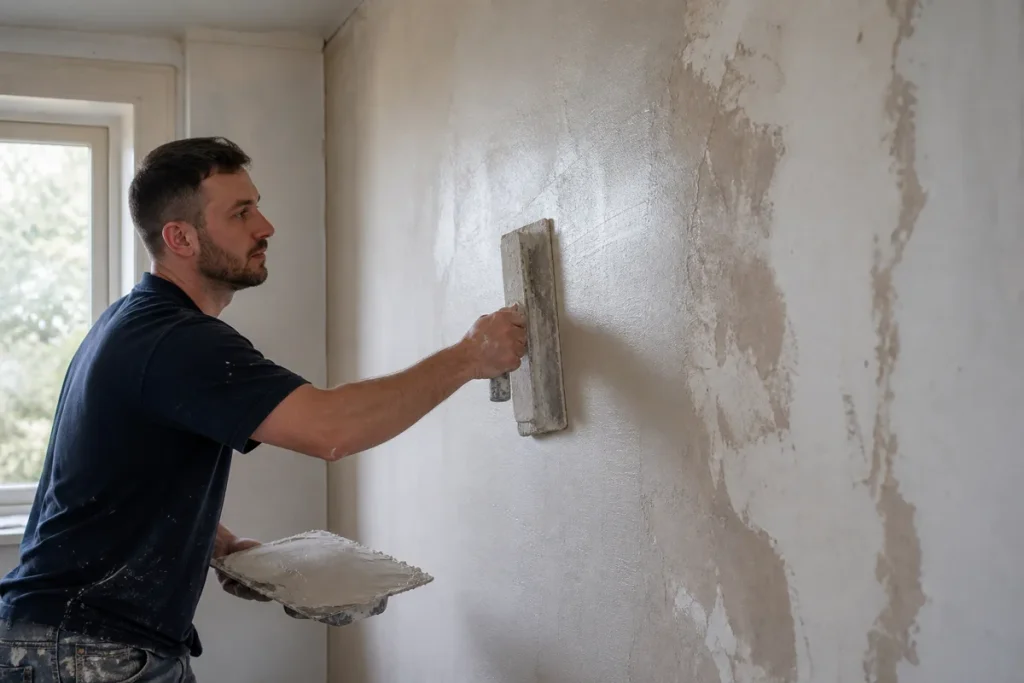
Skimming plaster is a thin finishing coat — usually 2 to 3mm — applied over a wall that is already sound, to leave it smooth and ready for paint. It costs R140 to R180 per square metre with materials in 2026, or R40 to R80 for labour only.
People often use “skimming” and “plastering” as if they mean the same thing. They do not, and the difference decides what your job should cost. Plaster and skim products are covered by standards published by the South African Bureau of Standards.
Skimming plaster vs plastering: the real difference
The distinction is thickness and purpose.
- Plastering builds a new surface at 10 to 15mm, usually straight onto brickwork. It creates the wall face.
- Skimming refreshes an existing surface at 2 to 3mm. It corrects the finish, not the structure.
Cost follows the same logic. Full plastering runs R180 to R220 per square metre with materials. Skimming is roughly half that, because there is far less material and less labour. For the full picture, see our article on plastering vs skimming.
If you have been quoted plastering rates for what is really a skim job, that is worth questioning. Equally, if a wall genuinely needs replastering, a skim will not save it. Our brickwork and plastering page covers the heavier work.
When skimming walls is the right choice
Skimming works when the wall behind is sound and only the surface disappoints.
- Old textured, stippled or Spanish-plaster finishes you want flat
- Fine surface cracks with no movement behind them
- Patchy repairs that need blending into one even surface
- Walls left rough after removing tiles, cupboards or wallpaper
- Any wall you want genuinely smooth before painting
When a skim coat will not fix it
Skimming is a finish, not a repair. These need dealing with first:
- Hollow or blown plaster — tap the wall; a drummy sound means it has come away from the brick and must be cut out
- Damp — a skim over damp will bubble and fail within a season
- Cracks that keep returning — that is movement, and it needs the cause found
- Badly out-of-true walls — 3mm cannot correct a wall that is 20mm out
Damp is the one that catches people. If a stain keeps coming back after painting, the wall is telling you something a skim coat will not silence. Get the cause diagnosed — often a damp proofing issue — before spending on the finish.
Skimming plaster price per square metre
- Labour only: R40 to R80 per m²
- Labour and materials: R140 to R180 per m²
- Skim over existing plaster: R150 to R190 per m²
- Cape Town rates: R155 to R195 per m²
- Small patch repairs: R500 to R1,200 flat
Work out your area by multiplying wall length by height, then subtracting large openings. A 4m x 2.7m wall is about 10.8m², so roughly R1,700 to R2,100 skimmed in Cape Town. Our guide to skimming walls goes into this properly.
How skimming plaster is applied
- Preparation. Clean the surface, remove loose material, sand glossy areas.
- Bonding coat. A primer so the skim grips properly.
- First pass. Thin and worked well into the surface.
- Second pass. Applied as the first firms up, then flattened.
- Trowel finish. A final polish once it has begun to set.
- Drying. Leave it properly before painting.
Timing is the skill. Trowel too early and you drag the material; too late and you leave marks that show through paint. It is why skimming looks deceptively easy and rarely goes well as a first DIY attempt. There is more detail in our piece on skim coat.
Drying before you paint
Give a thin skim at least seven days before painting. In a cold, wet Cape Town winter, allow longer.
Sealing damp plaster with paint traps the moisture. The result is patchy sheen, poor adhesion and peeling within months, which means redoing the painting you just paid for.
Should you skim or just fill?
A useful rule: filler fixes spots, skimming fixes surfaces.
- Filler — a few nail holes or an isolated crack. A handyman near me search will find someone for that in an afternoon.
- Skimming — the whole wall is uneven, textured or patchy, or you have more filled repairs than sound wall.
Once a wall carries several patches, filling more just creates a map of slightly different textures that paint makes more obvious, not less. At that point skimming the whole surface costs less than repainting twice. We cover this further in our guide to skimming plaster 40kg.
Our skimming services page explains what we cover, and you can send photos and measurements for a written price.
Frequently asked questions
What is skimming in plastering?
Skimming is a thin finishing coat of plaster, about 2 to 3mm thick, applied over a surface that is already sound. It flattens texture, fills fine cracks and leaves the wall smooth and ready for paint. Full plastering is different — that goes on at 10 to 15mm, usually onto bare brickwork, and creates the wall surface itself. We cover this further in our guide to uneven wall repair.
How much does skimming cost per m² in South Africa?
R140 to R180 per square metre for labour and materials in 2026, or R40 to R80 for labour only if you supply the materials. Cape Town rates sit slightly higher at R155 to R195. Small patch repairs are usually charged flat at R500 to R1,200 rather than by area. For the full picture, see our article on rhinolite plastering.
Is skimming the same as plastering?
No. Skimming is a 2 to 3mm finishing layer over an existing sound surface, while plastering builds a new 10 to 15mm surface, normally straight onto brick. Plastering costs roughly double, at R180 to R220 per square metre installed, because it uses far more material and labour. For the full picture, see our article on skimming plaster builders.
Can you skim over painted walls?
Yes, if the paint is sound and firmly attached. Glossy paint must be sanded first to give the skim a key, and the wall needs a bonding primer. Flaking or peeling paint has to be removed completely — a skim coat cannot grip a surface that is already coming away from the wall. If you are weighing that up, our guide to smooth wall finish is worth a read.
How do I know if my wall needs skimming or replastering?
Tap the wall. A solid sound means the plaster is still bonded to the brick and a skim will work. A hollow, drummy sound means the plaster has blown and must be cut out and replastered. Also replaster rather than skim if the wall is badly out of true — a 3mm skim cannot correct a wall that is 20mm off.