
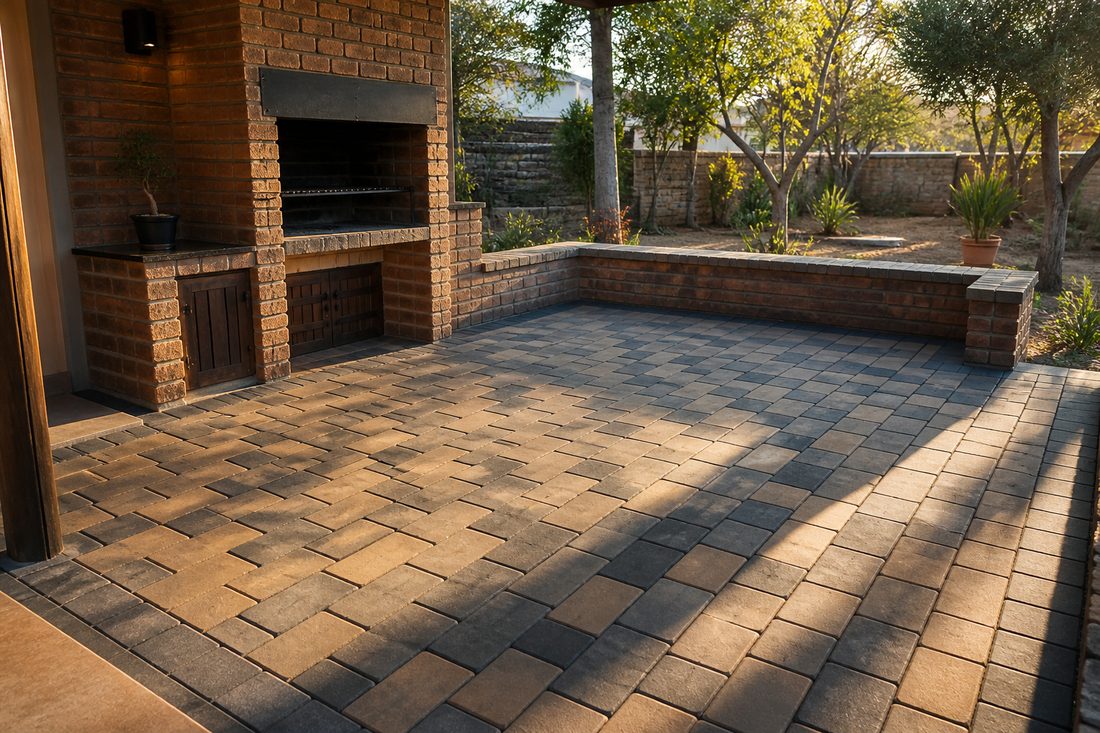
Brick paving Cape Town homeowners install costs about R385 to R770 per m² laid in 2026, against R330 to R495 per m² for concrete pavers. Stone sits higher again at R495 to R1,100 per m².
Clay brick costs more up front. Whether that is worth it comes down to one thing: how long you intend to look at it.
Brick paving Cape Town costs against concrete
The gap is real but smaller than people assume, because the groundwork underneath is identical either way.
- Concrete pavers installed: R330 to R495 per m²
- Clay brick paving installed: R385 to R770 per m²
- Stone and cobble installed: R495 to R1,100 per m²
- Supply only, concrete: R150 to R300 per m²
- Supply only, clay: R250 to R450 per m²
On a 40m² driveway the difference between the mid points is a few thousand rand, not a different budget bracket. Excavation, sub-base, bedding and edging cost the same for both.
Coverage differs slightly
- Concrete paver, 200 x 100mm: about 50 per m²
- Clay paver, 220 x 110mm: about 41 per m²
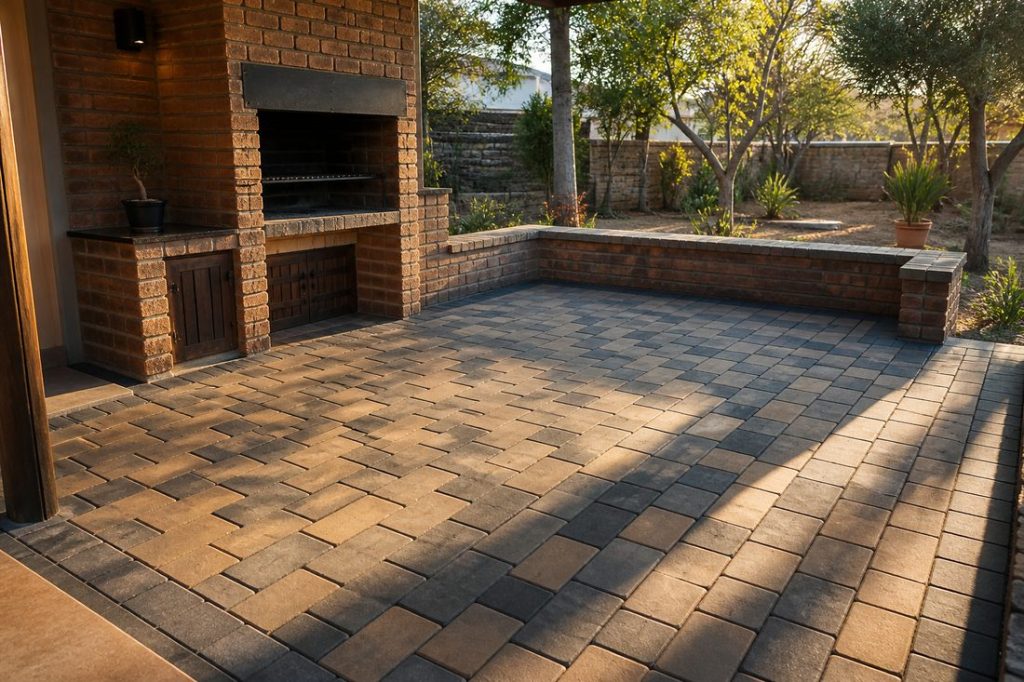
Durability over twenty years
Clay is fired. Concrete is cast. That single difference drives most of the comparison.
- Clay pavers are dense, resist scratching and wear, and handle chemical spills better
- Concrete pavers are strong but more porous, so oil and stains penetrate unless sealed
- Both depend far more on the base than on the unit. A good base under a cheap paver outlasts a premium paver on bad ground
Published lifespans put quality clay well beyond concrete, though anything laid on an uncompacted base fails long before the material does. That point is worth repeating because it is where money is actually lost.
Colour and the Cape sun
This is where clay wins clearly.
- Clay colour comes from the fired clay itself and runs right through the unit. It does not fade
- Concrete colour comes from pigment. Cheaper concrete pavers can visibly fade under harsh UV over roughly five to eight years
- A chipped clay paver shows the same colour underneath. A chipped concrete paver often shows grey
On a west-facing Cape Town driveway with full afternoon sun, that fade difference is not theoretical. Charcoal concrete in particular tends to drift towards grey.
Look and design flexibility
Concrete wins on variety, clay wins on character.
- Concrete: far more shapes, textures and colours, including tumbled cobble and large-format slabs
- Clay: a narrower palette of earthy reds, browns and tans, but a warmer traditional look
- Clay suits older homes, face-brick houses and heritage streets
- Concrete suits modern homes and anywhere you want a specific colour matched
If you want a large-format modern look, clay is not the format for it and the options are in our guide to the 500×500 concrete pavers price and coverage.
Maintenance in practice
Both are low maintenance. The routine is nearly identical.
- Sweep regularly so grit does not grind into the surface
- Wash down once or twice a year, gently rather than at full pressure
- Top up jointing sand where washing has removed it
- Treat weeds in joints early, before roots lift a unit
- Re-seal concrete every few years if the area is sealed
Concrete benefits more from sealing because it is porous. Clay usually does not need it. Both share the same real advantage over a poured surface: a damaged unit lifts out and is replaced individually, without patching or colour matching a whole slab.
High-pressure washing warning
A pressure washer held too close strips jointing sand and etches the paver face. Keep the lance back, work at an angle, and re-sand the joints afterwards. This is the single most common way homeowners damage their own paving. Paver strength classes and laying guidance come from the Concrete Manufacturers Association.
The verdict by use
- Driveway, staying long term: clay. The colour holds and it copes with oil
- Driveway, selling within five years: concrete interlockers. Same performance, lower spend
- Patio and entertainment area: concrete, for the finish and colour choice
- Pool surround: concrete in a textured non-slip finish
- Heritage or face-brick home: clay, to match the building
- Tight budget: concrete, and put the saving into the sub-base
Whichever you pick, the specification below the surface matters more, and the vehicle-load requirements are set out in our driveway paving Cape Town guide. If you are weighing an advertised deal, check it against our breakdown of paving specials first.
Deciding for your property
Look at the house, not just the price list. A brick-faced home with clay paving reads as one building. The same home with charcoal concrete reads as two decisions.
Our paving team quotes both materials on the same groundwork so the comparison is honest. Send us your area and a photo of the house and we will price both. The assessment is free and there is no call-out fee.
Frequently asked questions
Is brick paving better than concrete paving?
Clay brick holds its colour permanently, resists chemicals better and lasts longer, but costs more at R385 to R770 per m² installed against R330 to R495 for concrete. Concrete offers far more shapes, textures and colours for less money. Both depend more on the compacted base than on the paver itself.
How much does brick paving cost per square metre in Cape Town?
About R385 to R770 per m² installed in 2026, within a wider all-in residential paving band of roughly R390 to R680 per m² across all materials. Supply-only clay pavers run about R250 to R450 per m², and you need around 41 of the 220 x 110mm size per square metre.
Do concrete pavers fade?
Cheaper concrete pavers can fade noticeably under harsh South African UV over about five to eight years, because their colour comes from surface pigment. Clay pavers do not fade, as the colour comes from the fired clay and runs through the whole unit, so a chip shows the same colour underneath.
How do you maintain paving?
Sweep regularly, wash down once or twice a year, top up jointing sand where it has washed out, and treat weeds in the joints early. Seal concrete every few years if the area was sealed. Keep a pressure washer lance well back, because close high-pressure washing strips joint sand and etches the paver face.
Which paving is best for a driveway in Cape Town?
Clay brick if you are staying long term, since the colour holds under strong sun and it copes better with oil. 60mm concrete interlockers if budget matters or you are selling within a few years, as the structural performance is the same. Either way the driveway needs 250 to 300mm excavation, 150mm of compacted sub-base and a herringbone pattern.