
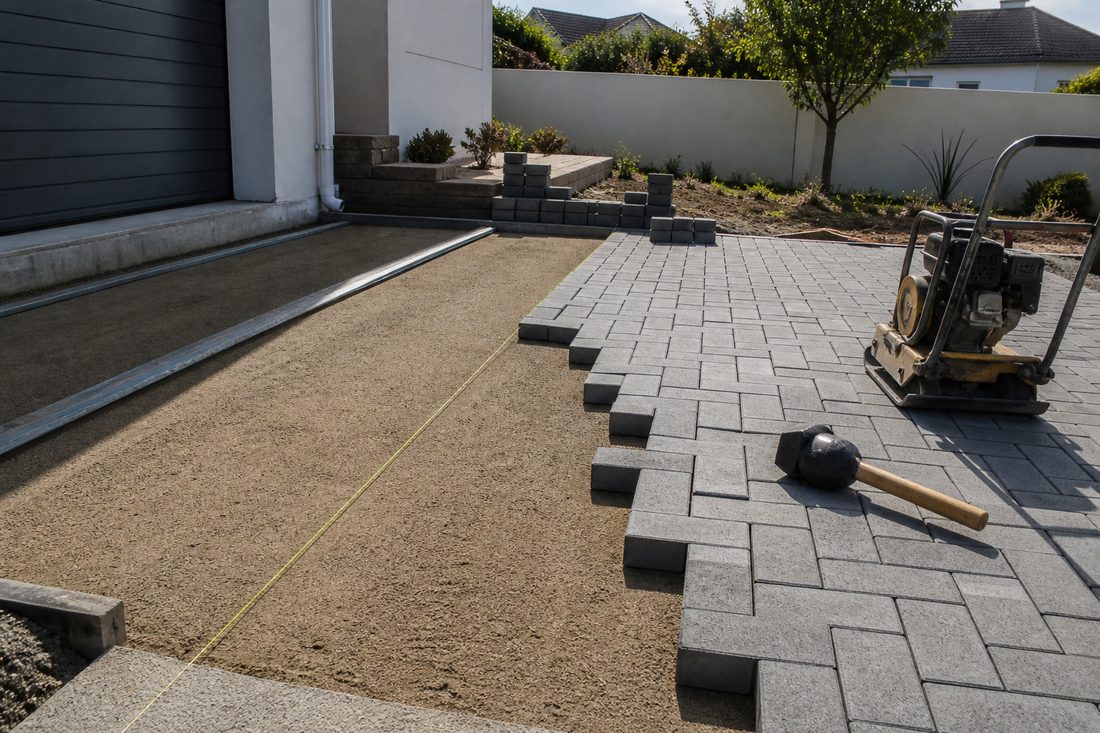
The 500x500 concrete pavers price in South Africa runs from about R50 to R215 per slab in 2026, depending on finish. At four slabs per square metre that is roughly R200 to R860 per m² supplied. Laid properly in Cape Town, expect R330 to R495 per m² all in for concrete.
That is a wide band, and the reason is finish, not size. Here is how to read it.
500x500 concrete pavers price per slab and per square metre
A 500 x 500 x 50mm slab covers 0.25m². You need exactly four per square metre before cutting waste. That makes the maths easy: multiply the slab price by four.
- Plain grey, budget range: around R50 a slab, roughly R200 per m² supplied
- Checkered and non-slip patterns: around R165 a slab, roughly R660 per m²
- Exposed aggregate and decorative finishes: around R213 a slab, roughly R850 per m²
Retailer listings quote the slab. Contractors quote the metre. Mixing the two is the single most common budgeting mistake we see on paving enquiries.
Add waste before you order
Large slabs cut badly. A 500×500 slab cut in half is not two useful pieces, it is one piece and rubble.
- Simple square area, running bond: add 7 to 10 percent
- Angles, curves or a diagonal layout: add 10 to 15 percent
- Order in one batch so the colour matches across the whole area
Where 500×500 slabs actually belong
This is a pedestrian format. At 50mm thick and 28kg a slab, it is designed to sit on a bed and carry people, not cars.
- Pool surrounds — few joints, less weed growth, cooler underfoot in a light colour
- Courtyards and patios — a clean modern look with minimal grid lines
- Garden paths and stepping runs — laid with gaps and planted between
- Service and washing-line areas — fast to cover, easy to lift later
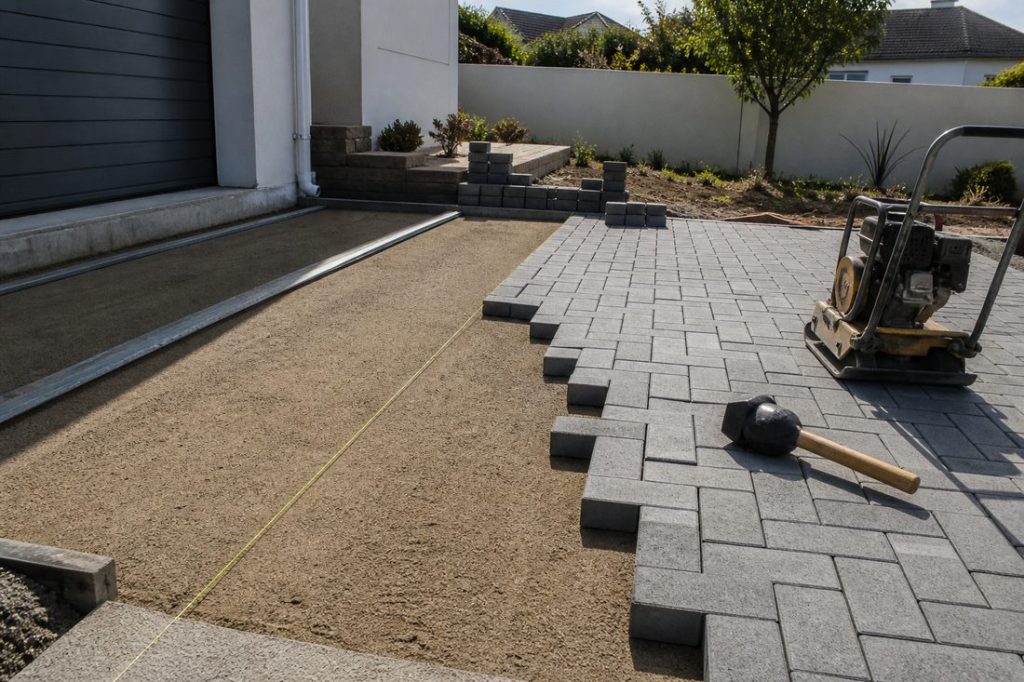
What they are not for is a driveway. Vehicle loads need a 60mm interlocking paver in a herringbone pattern, which is a different job entirely and covered in our guide to driveway paving Cape Town homeowners can actually rely on.
Why big slabs fail under cars
A large flat slab has no interlock. A tyre turning on it loads one corner, the bed shifts, and the slab rocks or cracks. Small units share the load between neighbours. Size is the problem, not quality.
500×500 versus 450×450 and 600×600
The three common square formats behave differently once you price them per metre.
- 450 x 450: 5 slabs per m², 23kg each, easiest to handle solo
- 500 x 500: 4 slabs per m², 28kg each, the usual middle choice
- 600 x 600: about 2.8 slabs per m², 42kg each, supply from around R216 per m²
Bigger slabs cover faster but punish you on cutting and on levelling. Any dip under a 600×600 shows as a visible rock. If the ground is uneven or the shape is complicated, the smaller 450×450 concrete paving slabs are usually the safer buy.
What installation adds to the price
Supply is under half the job. The rest sits underground where nobody can inspect it afterwards.
- Excavation and spoil removal: R50 to R100 per m²
- Compacted sub-base: R60 to R120 per m²
- Bedding layer, screeded flat: R30 to R50 per m²
- Laying, cutting, jointing: R100 to R200 per m²
Labour alone on a base someone else has prepared runs R100 to R200 per m². Once excavation, base and edge restraints are included it rises to R200 to R370 per m². Ask which of those two a quote describes, because the difference is the part that fails. Paver strength classes and laying guidance come from the Concrete Manufacturers Association.
Laying 500×500 slabs correctly
- Excavate about 150mm for a pedestrian area
- Lay and compact the sub-base in layers, not one deep dump
- Screed 25 to 30mm of bedding sand or crusher dust
- Set a fall of roughly 1 in 60 away from the house
- Lay from a straight edge, keeping joints even
- Fix an edge restraint so the outer slabs cannot creep
Falls matter more than most people expect in Cape Town. Winter rain on a flat pool surround finds the lowest point and stays there, and standing water is how you get slippery green slabs by August. Our paving team sets falls before laying a single slab.
Getting a straight answer on price
Give a contractor three things and you will get a usable number: the area in square metres, the slab you like, and what is on the ground now. Removing an old concrete surface is a separate line item and often a surprising one.
If you are weighing formats against a brick layout, compare it with brick paving Cape Town costs before deciding. When you have the measurements, send us the details for a written quote with the base spelled out. Assessment is free and there is no call-out fee.
Frequently asked questions
How many 500×500 pavers are in a square metre?
Exactly four. A 500 x 500mm slab covers 0.25m², so four cover one square metre before any cutting waste. Add 7 to 10 percent for a simple square area and 10 to 15 percent if the layout has angles, curves or a diagonal pattern. Order the full quantity in one batch so the colour matches.
How much do 500×500 concrete pavers cost?
Roughly R50 to R215 a slab in 2026 depending on finish. Plain grey slabs sit near the bottom, checkered non-slip patterns around R165, and exposed aggregate or decorative finishes near R213. At four slabs per square metre that is about R200 to R860 per m² supplied, before delivery and before installation.
Can you use 500×500 slabs for a driveway?
No. A 50mm flat slab has no interlock, so a turning tyre loads one corner and the slab rocks or cracks. Driveways need a 60mm interlocking paver laid in herringbone on a compacted sub-base. Keep 500×500 slabs for patios, pool surrounds, courtyards and paths.
What is the difference between 500×500 and 600×600 slabs?
Coverage and weight. You need four 500×500 slabs per square metre at about 28kg each, against roughly 2.8 600×600 slabs at about 42kg each. The 600×600 covers faster and supply starts near R216 per m², but it is harder to handle, harder to cut and shows any dip in the bed more clearly.
What does it cost to have paving slabs laid in Cape Town?
Concrete paving installed generally runs R330 to R495 per m² in Cape Town, within a wider all-in residential band of about R390 to R680 per m² across materials. Labour only on a prepared base is R100 to R200 per m², rising to R200 to R370 per m² once excavation, base and edging are included.