

Uneven wall repair usually comes down to one decision: skim the wall, or replaster it. Skimming costs around R140 to R190 per m² supplied and applied and fixes roughness. Replastering costs more and fixes shape.
Choosing wrong is expensive, because a skim coat over a genuinely wavy wall just gives you a smooth wavy wall.
What makes walls rough or uneven
Before deciding on a fix, work out what you are actually looking at.
- Poor original plastering. Plaster floated by eye rather than to a straightedge.
- Patch repairs. Old chases for pipes or cables filled proud or hollow.
- Removed fittings. Old tiles, shelves or wall units leaving scars and adhesive.
- Textured coatings. Stippled or roller-textured finishes that read as rough.
- Settlement cracking. Fine cracks that have been overfilled repeatedly.
- Delamination. Plaster that has separated from the brickwork and sounds hollow.
- Damp. Moisture blowing the plaster from behind.
The last two are not surface problems. No amount of finishing fixes them.
The straightedge test
Hold a long straightedge or spirit level against the wall in several directions and look at the gap behind it.
- Gaps of a few millimetres: a skim coat will handle it
- Gaps of 5 to 10mm: a dubbing-out coat then a skim
- Gaps over 10mm, or a wall visibly out of plumb: replastering territory
Then tap the wall with your knuckles. A dull, hollow sound means the plaster has let go, and that section has to come off regardless of how flat it looks.
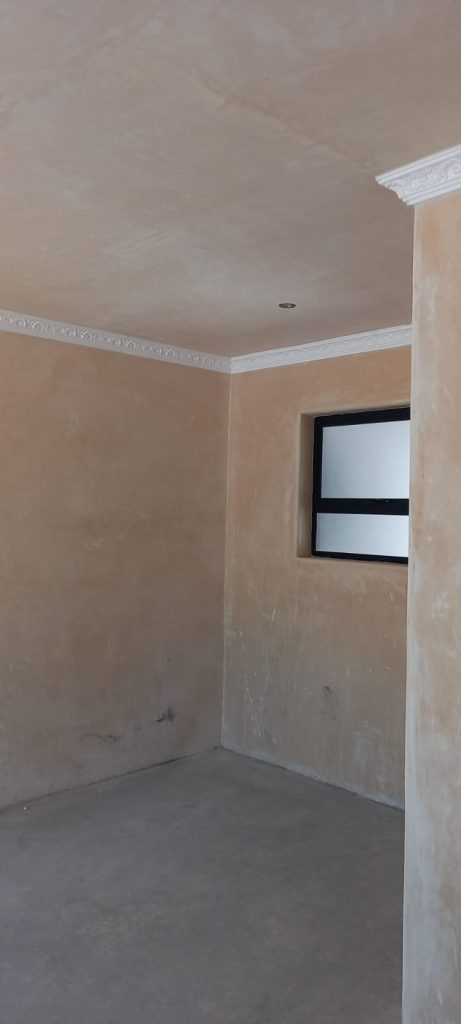
Uneven wall repair by skimming: what happens
A skim is a thin finishing coat, usually applied in two thin layers, that flattens texture and unifies patchy surfaces.
- Remove loose material, old adhesive, flaking paint and any failed filler.
- Cut out and fill deeper defects so the base is roughly consistent.
- Treat the surface with a bonding agent where suction is poor or the wall is painted.
- Apply the first thin coat and let it firm up.
- Apply the second coat and trowel it to a closed, smooth finish.
- Allow it to dry fully, then seal or prime before painting.
Drying time is the part people underestimate. Painting a skim that is still holding moisture leads to patchy sheen and, in bad cases, peeling.
Skim or replaster: how to decide
- Sound but textured surface: skim. Replastering is overkill.
- Minor cracks and damage spots: spot repair, then skim.
- Changing a textured finish to smooth: skim.
- Heavily damaged or delaminated plaster: cut out and replaster.
- Wall genuinely out of plumb or badly bowed: replaster, or line it out.
- Active damp: fix the source first, then decide.
If your walls are painted, the preparation changes and there are extra bonding steps — that case is covered fully in our guide to whether you can skim over paint.
What uneven wall repair costs in 2026
South African rates for skim work are reasonably settled.
- Skimming walls and ceilings: R40 to R80 per m² labour only, R140 to R180 per m² supplied and applied
- Skim over existing plaster: R50 to R90 per m² labour only, R150 to R190 per m² supplied and applied
- Patch skimming for minor repairs: commonly a flat rate rather than per m²
Replastering costs more because it involves removal, disposal, a base coat and a finish coat. It also takes longer to dry before you can paint. Our skimming plaster price breakdown goes further into what moves those numbers.
What makes a quote go up
- Painted walls needing sanding and bonding treatment
- Removal of old tile adhesive or textured coatings
- Deep dubbing-out before the finish coat
- High walls, stairwells and anything needing scaffolding
- Working in an occupied, furnished room
Getting flat walls before you paint
Paint is unforgiving. Side light from a window shows every ripple, which is why walls that “looked fine” disappoint after a repaint.
If you plan to paint anyway, fixing the surface first is the cheaper order of operations. Doing it afterwards means paying for the painting twice. Plaster and skim products are covered by standards published by the South African Bureau of Standards.
One more thing worth planning for: dust. Sanding filler and skim throws fine dust through a whole house if doors are left open. Seal the room, cover what stays in it, and agree upfront who does the clean-up at the end.
We offer a free assessment and no call-out fee, and we will tell you straight whether your wall needs a skim or a replaster. See our skimming service, read what skimming actually involves in our skimming plaster guide, or send us the room details for a quote.
Frequently asked questions
How do you fix an uneven wall?
It depends on how uneven it is. Sand down high spots and skim the surface where gaps behind a straightedge are only a few millimetres. Deeper hollows need dubbing out first, then a skim. A wall that is badly bowed, out of plumb or hollow-sounding needs replastering or lining out instead.
Can skimming fix uneven walls?
Skimming fixes rough, textured and patchy surfaces very well, because it is a thin finishing coat applied in two layers. It does not fix shape. If a long straightedge shows gaps over about 10mm, or the wall is visibly out of plumb, skimming will just give you a smooth uneven wall.
Should I skim or replaster my walls?
Skim if the existing surface is sound but textured, patchy or lightly cracked. Replaster if the plaster is hollow-sounding, delaminated, heavily damaged or affected by damp. Tap the wall with your knuckles: a dull hollow sound means that section has separated from the brickwork and must come off.
How much does it cost to skim a wall in South Africa?
Skimming walls and ceilings runs about R40 to R80 per m² for labour only, or R140 to R180 per m² supplied and applied. Skimming over existing plaster is slightly higher at R50 to R90 labour only and R150 to R190 supplied and applied. Small patch repairs are usually quoted as a flat rate.
How long should a skim coat dry before painting?
A skim needs to dry fully through, not just feel dry to the touch, and the timing depends on coat thickness, room ventilation and weather. Painting too early traps moisture and causes patchy sheen or peeling. Wait until the surface has an even colour with no darker damp patches, then prime before painting.