

Natural stone cladding is not one product. Sandstone, slate, quartzite, granite and local mudstones look different, cost different amounts and weather in completely different ways.
Pick on appearance alone and you can end up with a beautiful wall that starts shedding in five years. This guide compares the main options by look, price and durability.
The natural stone cladding options compared
Sandstone
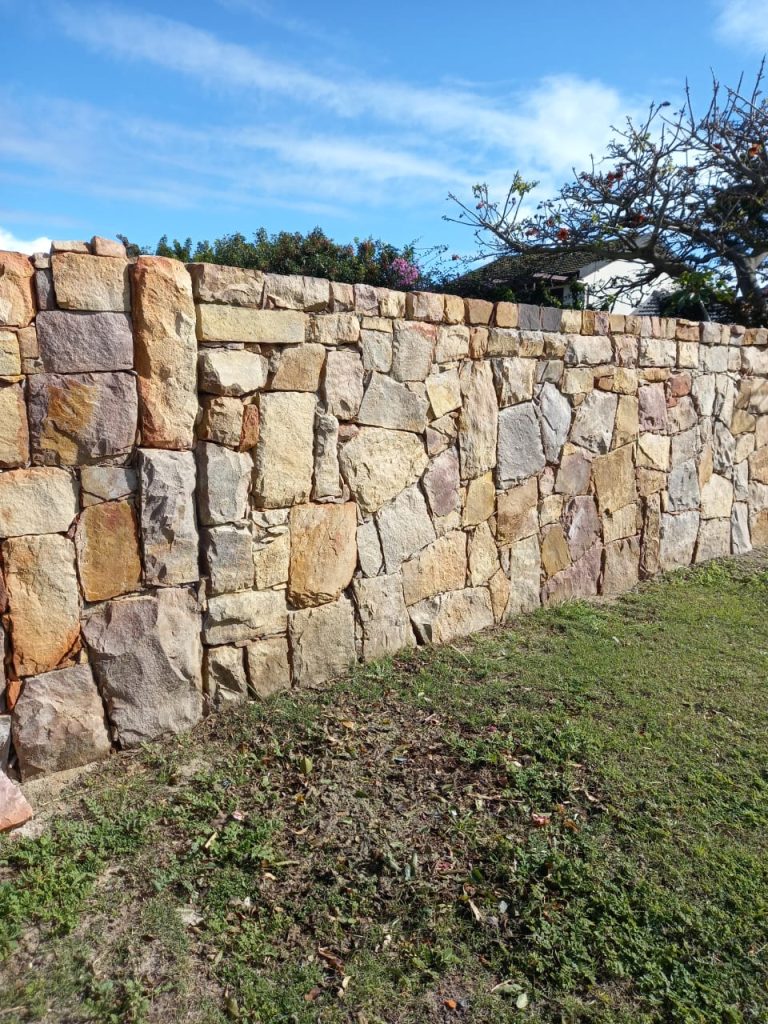
Warm honey, cream and buff tones. It is the softest, friendliest look of the group and very common on Cape Town garden and entrance walls. If you are weighing that up, our guide to stone wall cladding is worth a read.
- Look: warm, textured, slightly rustic
- Porosity: high, which is the catch
- Needs: a good sealer, and re-sealing on schedule
- Watch out for: salt. Airborne salt can penetrate porous stone and cause gradual surface loss
Sandstone is a fine choice inland or on a sheltered elevation. On a wall taking direct sea spray it is the riskiest of the common options. There is more detail in our piece on stone wall cladding exterior.
Slate
Dark greys, charcoals, greens and rusty multicolours with a naturally layered face.
- Look: fine, linear, modern when laid in tight courses
- Porosity: low
- Durability: good, including in coastal conditions
- Watch out for: poor-quality slate that flakes along its layers over time
Quartzite
The workhorse of South African cladding. SmartStone supplies quartzite cladding in white, autumn and mixed colourways as both strip walling and building stone.
- Look: crisp, hard-edged, light-reflective
- Porosity: low, and it is a dense, hard stone
- Durability: excellent, including against salt spray and UV
- Cost: the wide range. Loose riven quartzite is affordable, cut strips are premium
Granite
Dense, speckled and formal. Less common as rustic cladding, more common as cut panels.
- Look: uniform, hard, contemporary
- Porosity: very low
- Durability: the best of the group for UV, salt and general weather
- Cost: high. South African granite wall cladding is often quoted at R1,000 to R3,000 per square metre
Local mudstones and shales
Cape suppliers such as Elem Stone and Garden work with mudstones and shales for cladding, gabions and solid stone construction. These give the regional, slightly weathered look that suits older Cape properties. For the full picture, see our article on cladding tiles for exterior walls.
Quality varies more than with quarried quartzite, so look at an actual sample rather than a catalogue photo.
Marble and travertine
Beautiful indoors. Avoid on an exposed exterior. Marble etches, and both are vulnerable to acid and to salt.
What each type costs to supply
These are 2026 South African supply prices per square metre, stone only.
- Multicolour building stone: around R289
- Loose split riven: around R351 to R434
- Dry pack and interlocking cladding: around R405 to R523
- Light grey granite cladding: around R485
- Ivory quartzite riven: around R580
- Light travertine cladding: around R875 to R905
- Cut quartzite strips, 150×600: around R1,410 to R1,475
Promotional cladding tiles can be found from around R200 per square metre. Installed, expect R900 to R2,500 per square metre once labour and preparation are added, as set out in our guide to stone cladding prices.
How to choose natural stone cladding for your wall
Work through these in order. Exposure first, look last.
- How exposed is the wall? Direct sea spray narrows you to dense, low-porosity stone.
- Interior or exterior? Interior opens up travertine, marble and softer sandstones.
- Rustic or crisp? Building stone and loose riven read rustic. Cut strips read modern.
- Natural back or cut back? Cut-back stone fits faster and flatter, and costs more.
- Then colour.
Format matters as much as stone type
- Strip walling, around 20mm to 30mm, for fine horizontal courses
- Building stone, around 40mm to 60mm, for depth and shadow
- Interlocking and dry pack, for a tight jointless face
- Loose riven, for the most irregular, hand-built look
The same quartzite in strip form and in building stone form produces two walls nobody would guess were the same material. Cladding and masonry product guidance is published by the Concrete Manufacturers Association.
Coastal durability in Cape Town
Cape Town cladding lives with wind-driven salt, strong UV and a very wet winter. The stones that cope share one property: low porosity.
- Best on a seaward elevation: dense granite and hard quartzite
- Good: quality slate
- Only with careful sealing and upkeep: sandstone and softer mudstones
- Avoid outdoors: marble, and travertine on any exposed face
Sealing helps, but it manages the problem rather than removing it. On an exposed wall, plan on re-sealing every one to two years instead of the usual three to five. There is more detail on exposure and fixing in our guide to stone cladding for exterior walls, and a look at the broader material in our stone cladding guide.
Getting the stone and the fitting right
Two practical habits make the biggest visual difference. Draw stone from every pallet as you lay, because natural stone varies between batches. And dry-lay a section first to check the colour mix before anything is bonded down. Our guide to stone cladding tiles goes into this properly.
We will bring samples to site, show you how each one behaves on your particular elevation, and quote the stone separately from the labour. Free assessment, no call-out fee. We cover this further in our guide to natural stone cladding for exterior walls.
See our stonework services page, or tell us about your wall and we will come and look at it.
Frequently asked questions
What is natural stone cladding?
Quarried stone cut into thin pieces and fixed to the face of a wall built from brick, block or concrete. It is usually 20mm to 40mm thick and sold either as strip walling or as chunkier building stone. Unlike simulated cladding it is cut from real rock, so colour, size and depth vary from piece to piece. For the full picture, see our article on stone cladding cape town.
Which natural stone is best for cladding?
It depends on exposure. For an exposed or coastal wall, dense granite and hard quartzite perform best because their low porosity resists salt and UV. Quality slate is a good middle option. Sandstone and travertine look excellent but are porous, so they suit sheltered elevations and interiors far better than a seaward facade. Our guide to stone cladding vs face brick goes into this properly.
How much does natural stone cladding cost per square metre?
Supply prices in South Africa run from around R289 per square metre for multicolour building stone to R1,400 or more for cut quartzite strips, with promotional cladding tiles from about R200. Installed, including labour, preparation and adhesive, expect roughly R900 to R2,500 per square metre in 2026. If you are weighing that up, our guide to cladding tiles for tv wall is worth a read.
Does natural stone cladding need to be sealed?
Almost always, and porous stones like sandstone and travertine need it most. A sealer reduces moisture and salt penetration. On exterior walls, re-seal every three to five years as a general rule, and every one to two years where the wall takes harsh weather or direct salt spray. Never use acid cleaners on porous stone. We cover this further in our guide to stone cladding exterior.
Why does natural stone cladding vary in colour?
Because it is mined from the earth rather than manufactured, so colour, length, depth and height differ between pieces and between pallets. Suppliers recommend drawing stone from every pallet as you install rather than finishing one at a time, otherwise the finished wall shows obvious bands of colour.