
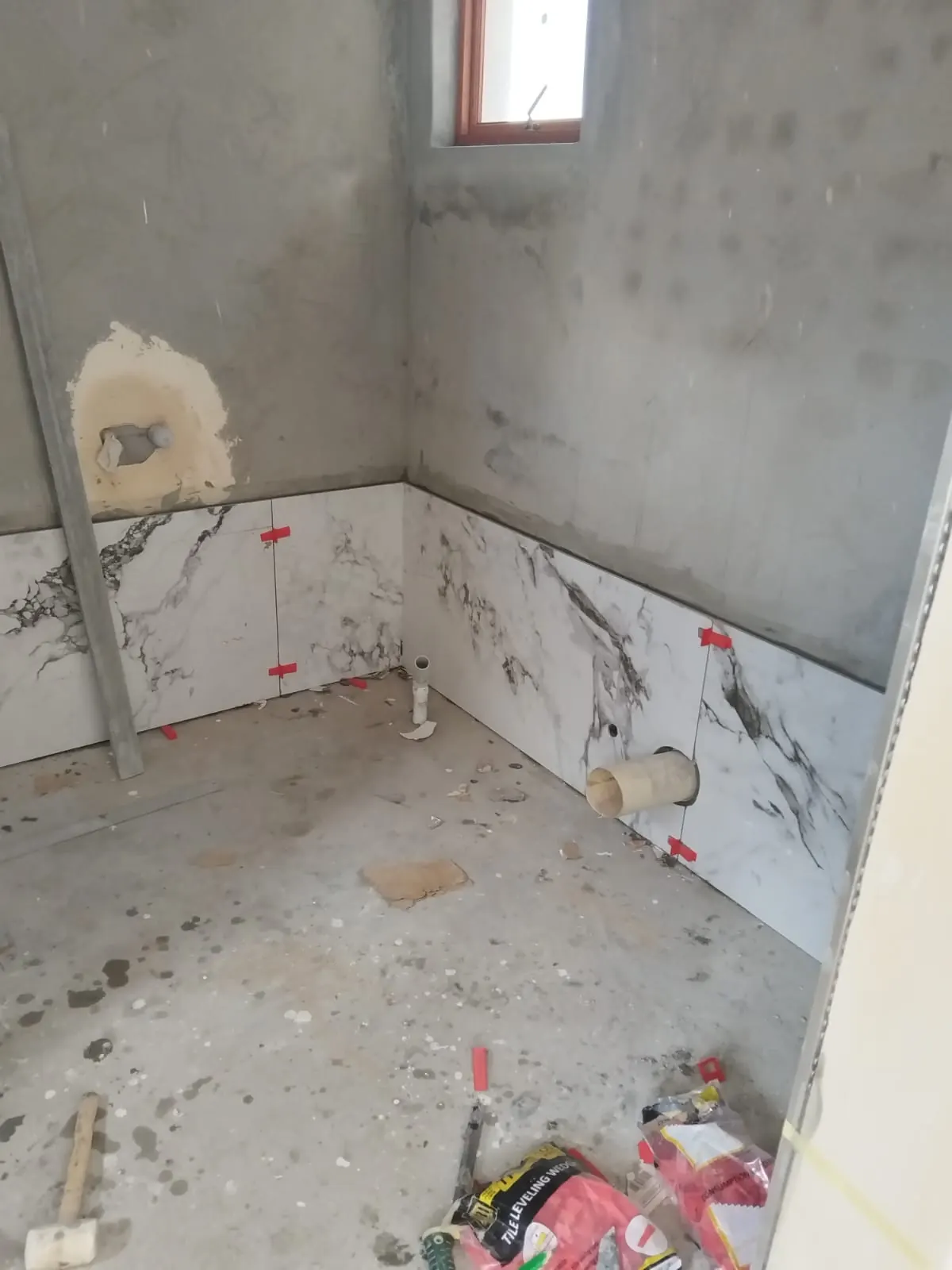
Re-tiling over tiles is possible, and manufacturers including TAL publish guidelines for it. But it only works when the existing surface passes a short list of checks, and it is the wrong choice more often than homeowners hope.
The appeal is obvious: no demolition, no dust, no rubble bill, and a job that finishes days earlier. Here is when it genuinely works and when it costs you more in the long run.
When re-tiling over tiles actually works
Tile-on-tile is a legitimate method with a real specification behind it. Every one of these has to be true.
- Every existing tile is firmly bonded – nothing sounds hollow when tapped
- No cracked, lifting or loose tiles anywhere in the area
- The surface is flat, within a few millimetres over two metres
- No damp, rising or otherwise, in the wall or floor
- The substrate can carry the extra weight of a second tile layer
- Height increase is acceptable at doors, thresholds and fittings
- The existing tiles are not natural stone or a flexible finish
Fail any single one of those and you should be removing rather than overlaying. A second layer bonded to a failing first layer fails twice as fast.
The tap test comes first
Tap across the whole floor or wall with a coin. Solid means bonded. Hollow means a void. If more than the odd tile rings hollow, the existing installation is already on its way out and adding weight to it is throwing money away.
The prep that makes it work
You cannot simply spread adhesive onto glazed tile and hope. Glaze is designed to be non-absorbent, which is exactly the opposite of what adhesive wants.
- Clean thoroughly – degrease to remove soap, polish, wax and cooking residue
- Key the surface – lightly abrade the glaze, or use a proprietary bonding primer
- Prime with a bonding primer suited to non-absorbent surfaces
- Fix loose tiles or cut them out and make the area good first
- Use the right adhesive – a modified adhesive rated for tile-on-tile, never a basic cement mix
- Offset the joints so new grout lines do not sit over old ones
- Carry movement joints through from the old layer to the new
That last point gets missed constantly. If the old floor has a movement joint, the new one needs a joint in the same place, all the way through. Grouting over it solidly guarantees a crack.
The height problem nobody budgets for
A second layer of tile plus adhesive adds roughly 15 to 20mm to the floor. In a bathroom or kitchen that has consequences.
- Doors may not clear and need trimming off the bottom
- Thresholds to adjoining rooms become a step or need a trim
- Skirtings get partly buried and can look wrong
- Toilet pans and shower trays sit lower relative to the finished floor
- Under-door ventilation gaps can close up completely
- Sliding doors and cupboard doors may foul the new surface
Measure the door clearance before you decide. Trimming an internal door is easy. Trimming an aluminium sliding door is not, and can cost more than the demolition you were avoiding.
Wet areas need extra thought
In a shower, the existing waterproofing sits under the old tile. You cannot inspect it, and you cannot rely on it. If the shower has ever leaked, tiling over it seals a known problem inside the wall.
Strip a shower back and waterproof it properly. It is the one area where the saving is never worth it, and a failed shower membrane turns into a ceiling repair downstairs. Tile and adhesive standards are published by the South African Bureau of Standards.
When to remove instead
Remove the old tiles when any of these apply.
- Tiles are drummy, cracked, lifting or tenting
- There is any sign of damp or a past leak
- The floor is visibly uneven or the screed is breaking up
- Height gain would foul doors or fittings you cannot adjust
- The existing tiles are natural stone or a soft, flexible finish
- You want to change the floor level or the fall in a shower
Removal typically costs R50 to R100 per m2, rising towards R150 where the adhesive is stubborn or the tiles are on walls. Set against a whole failed installation, that is cheap insurance. Our flooring installation Cape Town guide covers how a full strip and re-lay is sequenced.
Cost: overlay versus strip out
Overlaying saves the removal line and the disposal, which on a decent-sized floor is real money. It does not save the prep, and priming and a better adhesive add cost back.
- Saved: removal at R50 to R100 per m2, plus rubble disposal
- Saved: days of noise, dust and a room out of use
- Added: degreasing, keying and bonding primer
- Added: a modified tile-on-tile adhesive rather than a standard one
- Added: possible door trimming and threshold trims
The net saving is usually meaningful but smaller than people expect – and it disappears entirely if the overlay fails and has to be redone. If you are also weighing non-tile finishes, our laminate vs vinyl flooring comparison is worth a look, since both can sometimes go over a sound tiled floor with less height gain.
Getting an honest answer on your floor
The checks take about ten minutes. Tap the surface, check it with a straight edge, look for damp, and measure the door clearance. If all four pass, tiling over is a sensible option worth pricing.
If any fail, take the tiles up. It is not the answer anyone wants, but it is far cheaper than doing the job twice.
We assess and quote both routes across Cape Town through our flooring and tiling service, and we will tell you straight when an overlay is the wrong call. Assessments are free with no call-out fee – send us photos of the existing tiles and the door thresholds.
Re-tiling over tiles: the short version
If you take one thing from this guide on re-tiling over tiles, make it this: get the scope written down before anyone starts. Most disputes about re-tiling over tiles come from an unclear brief, not bad work.
We quote re-tiling over tiles properly, in writing, after seeing the job. Assessment is free and there is no call-out fee on quoted work.
Frequently asked questions
Can you tile over existing tiles?
Yes, when the existing tiles are firmly bonded with nothing sounding hollow, the surface is flat, there is no damp, and the extra 15 to 20mm of height is acceptable at doors and fittings. Manufacturers including TAL publish specific tile-on-tile guidelines. If any of those checks fail, the old tiles should come up.
How do you prepare old tiles for new tiles?
Degrease the surface thoroughly to remove soap, wax and cooking residue, then key the glaze by lightly abrading it or applying a bonding primer made for non-absorbent surfaces. Cut out and make good any loose tiles first, use a modified tile-on-tile adhesive, and offset the new joints from the old ones.
How much height does tiling over tiles add?
Roughly 15 to 20mm once you count the new tile and the adhesive bed. That is enough to stop internal doors clearing the floor, create a step at thresholds, partly bury skirtings and close up under-door ventilation gaps. Measure the door clearance before deciding, because trimming a sliding door is expensive.
Is it cheaper to tile over tiles or remove them?
Overlaying is usually cheaper because it saves removal at R50 to R100 per square metre plus rubble disposal, and it saves days of dust and noise. Some of that saving comes back as degreasing, bonding primer and a more expensive adhesive. It stops being cheaper the moment the overlay fails and has to be redone.
Can you tile over tiles in a shower?
It is the one place we would not. The existing waterproof membrane sits under the old tile where you cannot inspect it, and if the shower has ever leaked you are sealing that problem inside the wall. Strip a shower back to the substrate and waterproof it properly before re-tiling.