
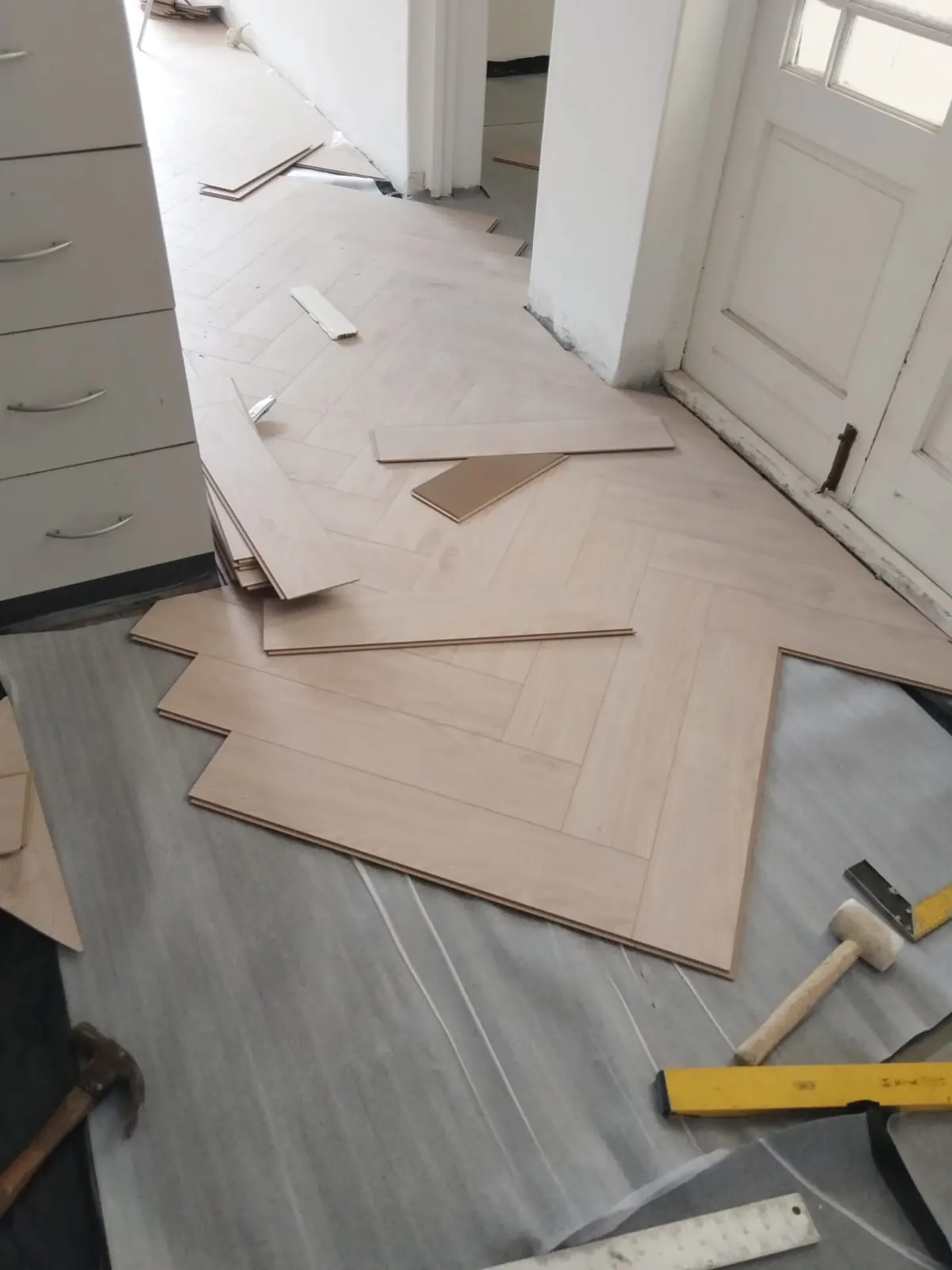
The laminate vs vinyl flooring question comes down to one thing more than any other: will the floor ever see water? Almost everything else is a preference. That single answer decides most homes.
This guide compares the two on the points that actually change how you live with the floor, and gives a straight verdict room by room.
What each floor is made of
They look similar in a showroom and behave very differently in a house.
- Laminate is a dense fibreboard core with a printed decorative layer and a hard wear coat on top. The core is wood-based.
- Vinyl is a plastic product all the way through, either a flexible luxury vinyl plank or a rigid stone-plastic composite core.
That one structural difference drives every practical difference below. Wood-based cores swell when they get wet. Plastic cores do not.
Laminate vs vinyl flooring on water resistance
Vinyl wins this outright, and it is not close.
- Vinyl: the plank itself is waterproof. A spill left overnight does no harm to the material.
- Laminate: water-resistant at the surface only. Standing water that reaches a joint soaks into the core, which swells and lifts at the edges.
Swollen laminate cannot be repaired. The affected boards have to come out. That is why vinyl is the standard recommendation for kitchens, bathrooms, laundries and entrance halls.
The mopping difference
Vinyl can be wet-mopped. Laminate should only be damp-mopped with a well wrung cloth. Neither should be steam-cleaned, because pressurised vapour forces moisture through the seams and swells the core underneath.
Even on vinyl, the seams between planks are the weak point rather than the surface. A damp microfibre mop is safer than a soaking one on both floors.
Feel, sound and looks
Laminate has the advantage here, and it is the reason people still choose it.
- Warmth: laminate is generally thicker and feels warmer underfoot than thin vinyl
- Realism: deep embossing on good laminate reads as more convincing timber
- Sound: vinyl absorbs footfall better; laminate can sound hollow over a poor underlay
- Firmness: laminate feels more solid, vinyl slightly softer and quieter
Thickness matters for a practical reason too. A thicker laminate board is more forgiving over a subfloor that is not perfectly flat, while thin vinyl telegraphs every ridge and dip beneath it.
Durability and lifespan
Both are hard-wearing, but they fail in different ways.
- Scratches: quality laminate has a very hard wear layer and resists surface scratching well
- Dents: vinyl is softer, so heavy furniture legs and dropped items can mark it
- Pets and kids: vinyl copes better overall, mostly because accidents involve liquid
- Heavy furniture: laminate handles point loads better
- Water damage: laminate’s one catastrophic failure mode, and it is permanent
In a dry room with careful use, either floor lasts many years. The difference is that laminate’s weakness is a single event, while vinyl’s weaknesses accumulate slowly and visibly. Tile and adhesive standards are published by the South African Bureau of Standards.
Room by room verdict
Here is the short version for a typical home.
- Kitchen: vinyl. Splashes and appliance leaks are inevitable.
- Bathroom: vinyl or tile. Never laminate.
- Laundry: vinyl, for the same reason as the kitchen.
- Bedrooms: laminate. Dry, low traffic, and the warmer feel matters where you walk barefoot.
- Lounge and dining: either. Laminate for looks, vinyl if there are pets or small children.
- Entrance hall: vinyl, because wet shoes come through it all winter.
- Rentals: vinyl, because you cannot control how it is cleaned.
Mixing the two across a house is completely normal and often the right answer. Matching the plank colour across a threshold keeps it looking deliberate. Our flooring and tiling team can match a vinyl kitchen to a laminate lounge so the transition reads as a design choice.
Which is easier to fit?
Click-lock versions of both float over the subfloor and go down quickly. Glue-down vinyl is the slowest and needs the flattest base. What neither product tolerates is an uneven slab, so the preparation matters more than the product choice.
Making the final call
Work through it in this order.
- Will this room ever get wet? If yes, choose vinyl and stop there.
- Do you walk barefoot in it? Laminate feels warmer.
- Are there pets or toddlers? Vinyl, for the accidents.
- Is the subfloor uneven? Thicker laminate hides more.
- Is it a rental? Vinyl, every time.
Budget rarely settles this argument, because the two overlap heavily once fitting is included. If cost is the deciding factor, the vinyl flooring installation cost guide sets out the supply and labour split in full.
Coastal homes have an extra consideration that inland guides skip entirely. Humidity, salt air and hard sun through big windows all shorten a floor’s life, and the best flooring Cape Town guide covers what survives it.
Still undecided? We offer a free assessment with no call-out fee. Tell us which rooms you are doing and we will recommend per room rather than selling one product for the whole house.
Frequently asked questions
Is vinyl flooring better than laminate?
For wet areas, yes. Vinyl is waterproof through the whole plank, so kitchens, bathrooms, laundries and entrance halls should use it. Laminate is better in dry rooms because it is thicker, feels warmer underfoot and usually looks more like real timber. Neither is better overall, they suit different rooms.
What is the difference between laminate and vinyl flooring?
Laminate has a wood-based fibreboard core with a printed layer and hard wear coat on top. Vinyl is plastic throughout, either flexible luxury vinyl or a rigid stone-plastic composite. That single structural difference explains everything else: the wood core swells if water reaches it, while the plastic core does not.
Can you wet mop laminate flooring?
Not properly. Laminate should only be damp-mopped with a well wrung cloth, because standing water that reaches a joint soaks into the core and swells the board permanently. Vinyl can be wet-mopped. Neither floor should ever be steam-cleaned, since pressurised vapour pushes moisture straight through the seams.
Which flooring is more durable, laminate or vinyl?
They fail differently. Quality laminate has a harder wear layer, so it resists surface scratches and heavy furniture better. Vinyl is softer and can dent, but it shrugs off water, pet accidents and spills that would destroy laminate. In a dry, careful home laminate lasts well; anywhere near moisture, vinyl lasts longer.
Which flooring is warmer and quieter underfoot?
Laminate generally feels warmer because it is thicker, which matters in bedrooms where you walk barefoot. Vinyl is quieter, since the softer plastic absorbs footfall rather than reflecting it. Laminate can sound hollow if it is laid over a thin or cheap underlay, so the underlay choice affects this as much as the plank does.