
Most built-in cupboards bedroom ideas you find online are photographs of very large rooms. These nine are ones that work in ordinary Cape Town bedrooms, with a note on what each does to the cost.
Fitted cupboards run R4,400 to R13,200 per linear metre installed in 2026, so the ideas that add storage without adding metres are the ones worth knowing.
Built-in cupboards bedroom ideas that create storage from nothing
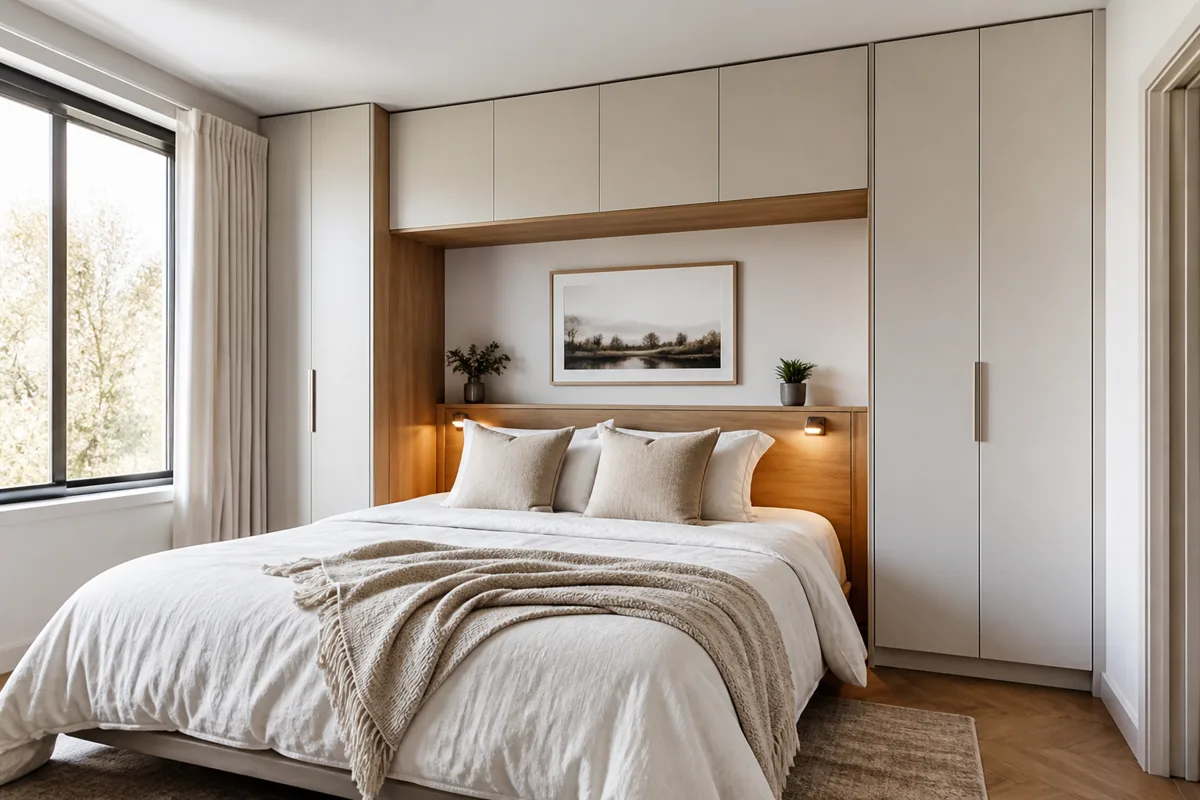
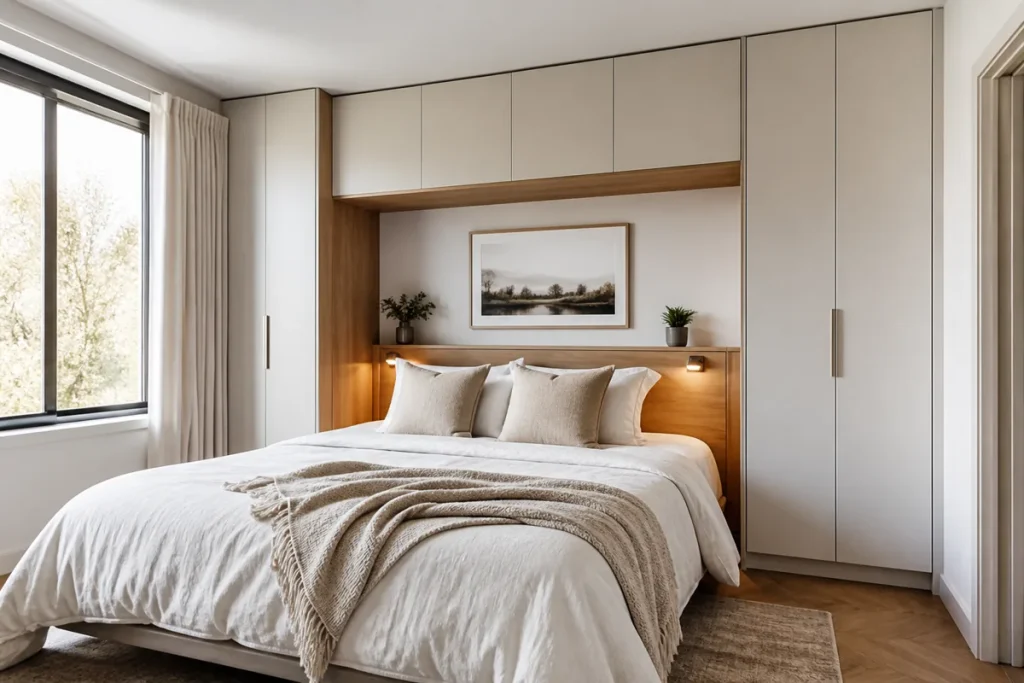
1. Over-bed bridging
Two tall towers either side of the bed, linked by a boxed section above the headboard. It turns the wall the bed sits against into storage, which is normally dead space.
Costs more per metre than a plain run because of the extra structure, but adds storage without taking floor space.
2. Building into an alcove
Chimney breasts and structural recesses leave natural gaps. Filling them means the cupboard depth comes free — you are using space the room already lost.
3. Cupboards to the ceiling
Standard wardrobes stop around 2.1m and waste everything above. Running units to the ceiling adds a boxing shelf for luggage and seasonal bedding, and looks deliberate rather than leftover.
It also removes the dust ledge that every freestanding wardrobe collects. Where the ceiling itself is tired or uneven, sort that first — a ceiling skimming job is far easier before a full-height unit is fixed against it.
Ideas for tight bedrooms
4. Mirror-fronted sliding doors
Two problems solved at once. Sliding doors need no swing clearance, and the mirror bounces light around a small room while removing the need for a separate one.
5. Shallow side-hanging
Standard depth is about 600mm. Where you cannot spare it, a 500mm carcass with a side-facing rail still hangs clothes properly.
6. A corner run instead of a dead corner
An L-shaped run with a side-access bay uses a corner that would otherwise be a void behind a door.
Ideas that change how it looks
7. Handleless push-catch doors
A clean flat face with no hardware breaking the line. Works particularly well in small rooms because there is less visual clutter.
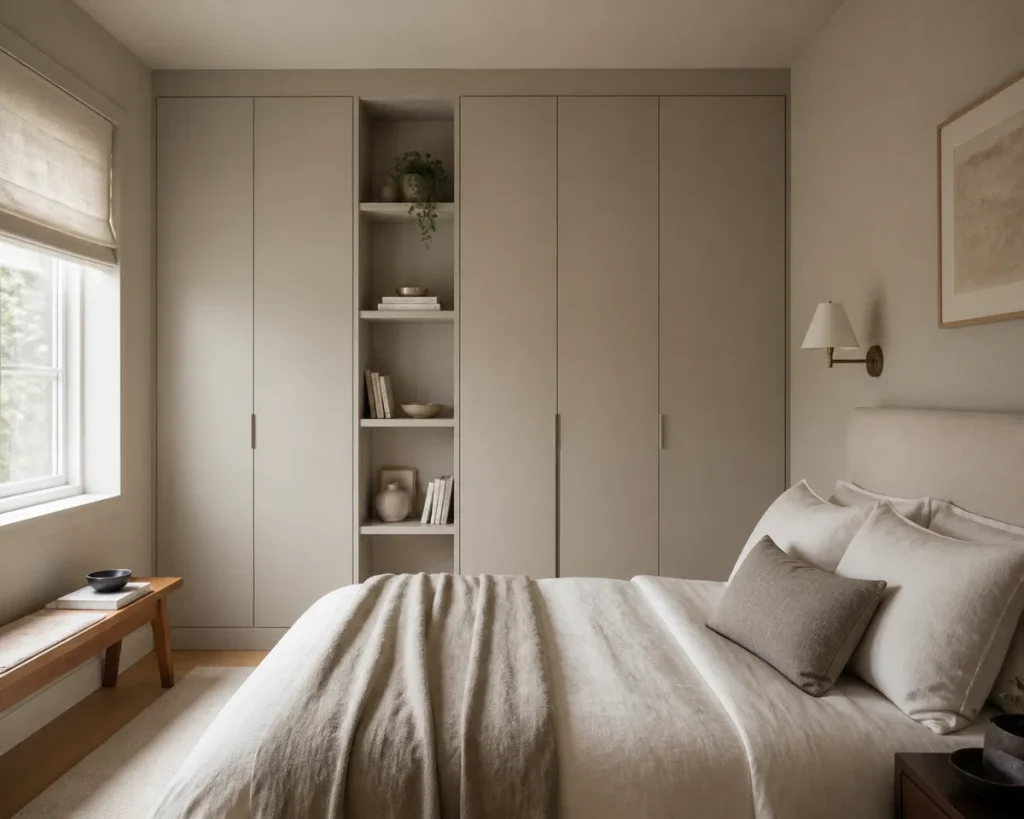
8. Mixing open and closed
A short run of open shelving between closed units breaks up a solid wall of doors, and gives somewhere for books and everyday items. Board and timber product standards are published by the South African Bureau of Standards.
Keep the open section small. It only looks good if it stays tidy.
9. Colour-matching to the walls
Painting or spraying cupboard fronts the same colour as the walls makes them recede, so a large run of storage stops dominating a small room. It costs more than melamine, but it is the single most effective way to make fitted storage disappear.
What each idea does to the price
- Plain melamine run: R4,400 to R8,000 per metre — the baseline
- Sliding or mirror doors: adds cost, needs a deeper carcass
- Over-bed bridging: more structure, more per metre
- Sprayed colour-match: the top bracket, R13,200 and up
- Soft-close hardware: a modest add, and the one never to skip
Hardware is where saving money costs money. Doors get opened thousands of times a year, and cheap runners fail first — replacing them later means taking the unit apart.
Which ideas give the most storage per rand
If the budget is fixed, some choices return far more than others.
- Height before width. Running to the ceiling costs a little more per metre and adds a whole shelf band.
- Double-hanging inside. Two short rails in one bay hold roughly twice a single long rail, and costs almost nothing extra.
- Alcoves before new runs. Filling a recess uses depth the room already lost.
- Plain fronts, better internals. Spend on hardware and layout rather than on a sprayed finish.
The most common regret is paying for a premium finish on a badly planned interior. The finish is what visitors notice. The layout is what you live with.
Making an idea work in your room
Measure the wall width and the ceiling height, then note every obstruction: skirting, cornice, plug points, light switches, window reveals and which way the door swings.
Sequence matters too. Wall repairs and skimming happen first while the wall is open, then painting, then the cupboards go in last.
For full pricing see our built in cupboards bedroom guide, or the built in bedroom cupboards designs article for internal layouts. When you are ready, send us your measurements.
Frequently asked questions
What is the best built-in cupboard idea for a small bedroom?
Mirror-fronted sliding doors, because they solve two problems at once. Sliding doors need no swing clearance in front of the unit, and the mirror reflects light to make the room feel larger while removing the need for a separate mirror. Running the units to the ceiling adds storage without using more floor space.
How can I add bedroom storage without losing floor space?
Use space the room has already lost. Over-bed bridging turns the headboard wall into storage, alcoves and chimney recesses give you depth for free, and running cupboards to the ceiling recovers the metre above a standard wardrobe. All three add capacity without reducing usable floor area.
Should built-in cupboards match the wall colour?
In a small room, usually yes. Colour-matching the fronts to the walls makes a large run of storage recede visually instead of dominating the space. It costs more than a standard melamine finish because it needs spraying, but it is the most effective way to make fitted cupboards feel less bulky.
Are handleless cupboard doors practical?
Yes, push-catch mechanisms are reliable and give a clean flat face with nothing breaking the line. They suit small rooms because there is less visual clutter. The trade-off is that fingerprints show more on the door face, so lighter or textured finishes work better than high gloss.
Is open shelving a good idea in a bedroom cupboard?
In small doses. A short run of open shelving between closed units breaks up a solid wall of doors and gives somewhere for books and daily items. Keep it limited, because open storage only looks good while it stays tidy — most people are better served by more closed space than they expect.