
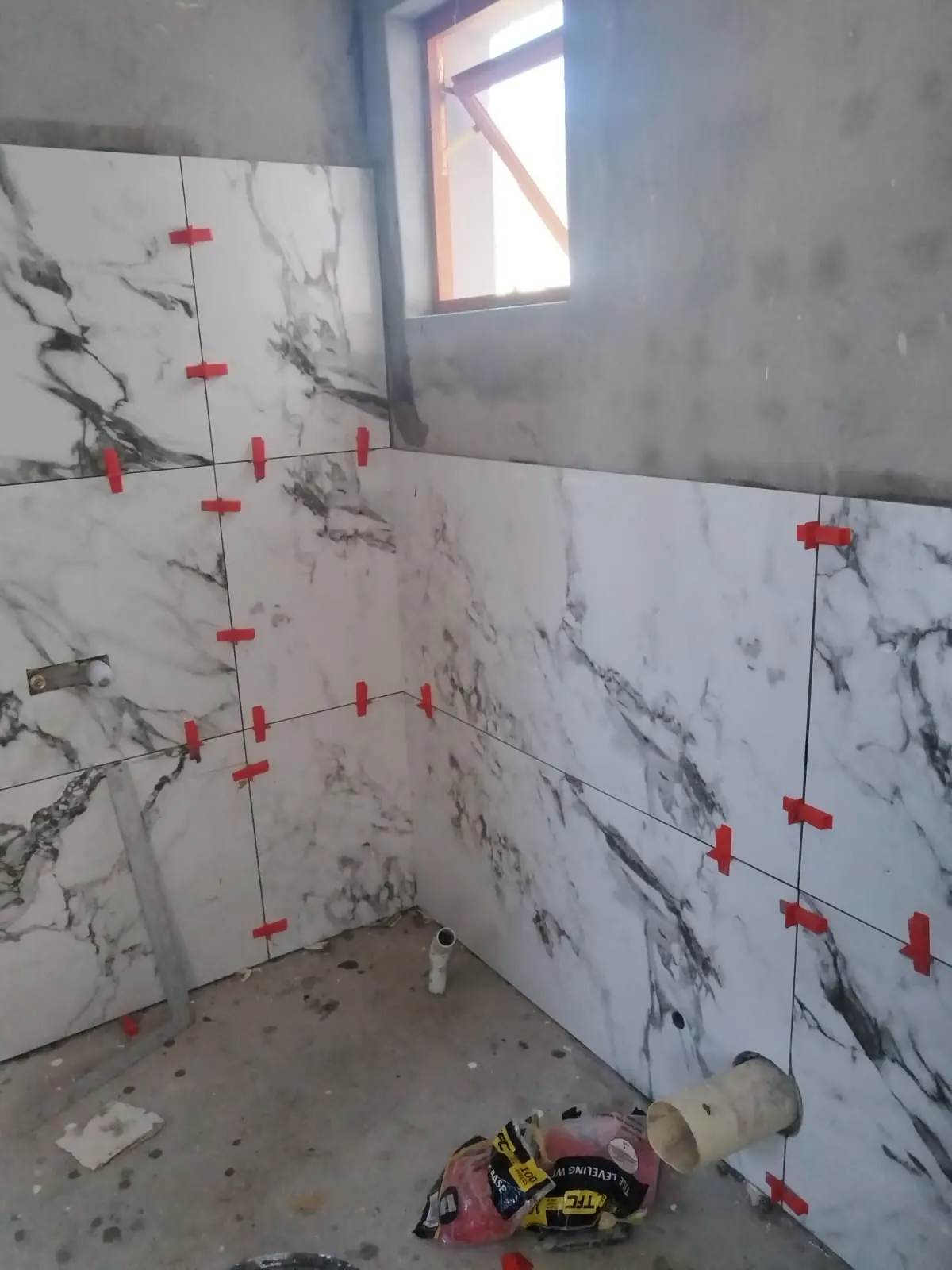
Tile removal cost in Cape Town sits at roughly R50 to R100 per square metre in 2026 for a standard floor, rising towards R150 where the adhesive is stubborn or the tiles are on walls.
That looks like a small line on a quote. In practice removal drives the dust, the disruption, the rubble bill and often an unexpected screed repair. Here is the whole picture before you commit to a strip-out.
What the tile removal cost per square metre covers
- Floor tile removal: R50 to R100 per m2 typical, up to R150 in difficult cases
- Wall tile removal: R60 to R180 per m2, because plaster damage is likely
- Adhesive and residue removal: often a separate line, and it is real work
- Large format tiles: priced higher, they are heavier and slower to break out
- Natural stone: higher again, heavy and prone to shattering
The single biggest variable is what the tiles are stuck to and with what. Tiles bedded in a thick sand-cement mortar come up in a different world of effort to tiles fixed with a thin modern adhesive.
Why wall removal costs more than floor removal
On a floor, brute force is largely acceptable – the screed below is being made good anyway. On a wall, every chisel blow risks tearing plaster off the brickwork.
Realistically, stripping wall tiles usually damages the plaster underneath. Budget for patch plastering, or in a bathroom, for re-plastering the wall entirely. That is often a bigger cost than the removal itself and it belongs on the quote from day one, alongside the plastering work it creates.
Dust, protection and disposal
Tile removal is the dustiest job in a house. Fine silica dust travels through an entire home in minutes and settles on everything.
- Sheeting and taped doorways to isolate the work area
- Dust extraction on breakers and grinders where possible
- Covering fittings – baths, basins and cupboards that are staying
- Protecting the route out for barrowing rubble
- A final clean before any new work starts
Ask specifically what dust protection is included. It is a genuine difference between contractors and a common source of complaints on otherwise good jobs.
Rubble is heavier than it looks
Tile rubble is dense. A modest bathroom generates several hundred kilograms, and a whole ground floor can run to a few tonnes. Disposal is priced by volume or load, and access decides the cost.
- Ground floor with driveway access: cheapest, straight into a bakkie or skip
- Upstairs or a flat: every barrow load is carried, which adds hours
- Complexes and estates: may restrict skip placement and working hours
- Legal disposal at a licensed site – ask where it is going
Confirm whether disposal is in the quote or excluded. “Removal” sometimes means only breaking the tiles out and leaving the rubble stacked in your garden.
Screed damage: the cost that surprises people
Under the tile is a screed, and it rarely survives untouched. Chipping tiles up takes divots out of it, and old adhesive left behind creates ridges.
Before anything new can be laid, that surface has to be flat and sound again. Depending on what you find, that means: Tile and adhesive standards are published by the South African Bureau of Standards.
- Grinding or scraping off residual adhesive
- Patch repairs to divots and chipped areas
- Self-levelling compound over the whole floor
- A completely new screed where the old one is cracked or crumbling
Nobody can price this accurately before the tiles come up, so an honest quote gives a rate for it rather than a fixed figure. Treat a quote that promises no make-good at all with suspicion.
What removal adds to a full re-tile
Put together, a strip-and-re-tile stacks up roughly like this per square metre.
- Removal: R50 to R100 per m2
- Adhesive residue and make-good: variable, quoted on inspection
- Levelling compound or screed: variable
- Rubble disposal: priced by load
- New tiling labour: R150 to R250 per m2 standard, R200 to R350 large format
- New tiles, adhesive and grout: R300 to R1,500 per m2 supplied and installed
- Waterproofing in wet areas, priced separately
Removal and make-good frequently add 20% to 30% to what people budget when they only priced the new tiling. It is the main reason overlays look attractive, though overlays only work on a sound, flat, dry surface. If you are also comparing finishes, our best flooring for Cape Town’s coastal climate guide covers what suits local conditions.
How long it takes
A bathroom strip-out is usually a day. An average ground floor is two to four days including clean-up and screed make-good. Add time if access is poor or a complex restricts working hours.
Plan for the room to be unusable. In a single-bathroom home, that needs thinking about before the first tile is broken.
Booking tile removal in Cape Town
Get the removal, the make-good rate and the disposal quoted as three separate lines. If they are bundled into one figure, ask for the split – that is where the surprises hide.
We handle removal, screed make-good and re-tiling as one job through our flooring and tiling service, so there is nobody to blame in the middle if the floor underneath turns out worse than expected. Assessments are free with no call-out fee. Send us the room sizes and some photos and we will quote the removal and the new floor separately.
Frequently asked questions
How much does it cost to remove tiles per square metre?
Floor tile removal typically costs R50 to R100 per square metre in Cape Town, rising towards R150 where the adhesive is stubborn or the tiles were bedded in thick mortar. Wall tile removal runs higher at around R60 to R180 per square metre because plaster damage is very likely and needs making good.
Does tile removal include rubble disposal?
Not always, and it is worth asking directly. Some quotes cover only breaking the tiles out, leaving the rubble stacked on site for you to deal with. Tile rubble is dense – a bathroom produces several hundred kilograms – and disposal is priced by load, with upstairs or restricted access adding significantly.
Will removing tiles damage the screed underneath?
Almost always to some degree. Chipping tiles up leaves divots, and old adhesive leaves ridges that must be ground or scraped off. Depending on the damage you may need patch repairs, a self-levelling compound over the whole floor, or a new screed. No one can price this exactly before the tiles come up.
How much dust does tile removal make?
A lot. It is the dustiest job in a house and fine dust travels through an entire home within minutes. Proper contractors sheet and tape doorways, use dust extraction on breakers and grinders, cover fittings that are staying, and clean thoroughly before new work starts. Ask what protection is included.
How long does it take to remove tiles from a bathroom?
Usually about a day for the strip-out itself, then more time for adhesive removal and screed make-good before new tiling can begin. A full ground floor typically takes two to four days including clean-up. Poor access, upstairs work or complex rules on working hours all extend that.