
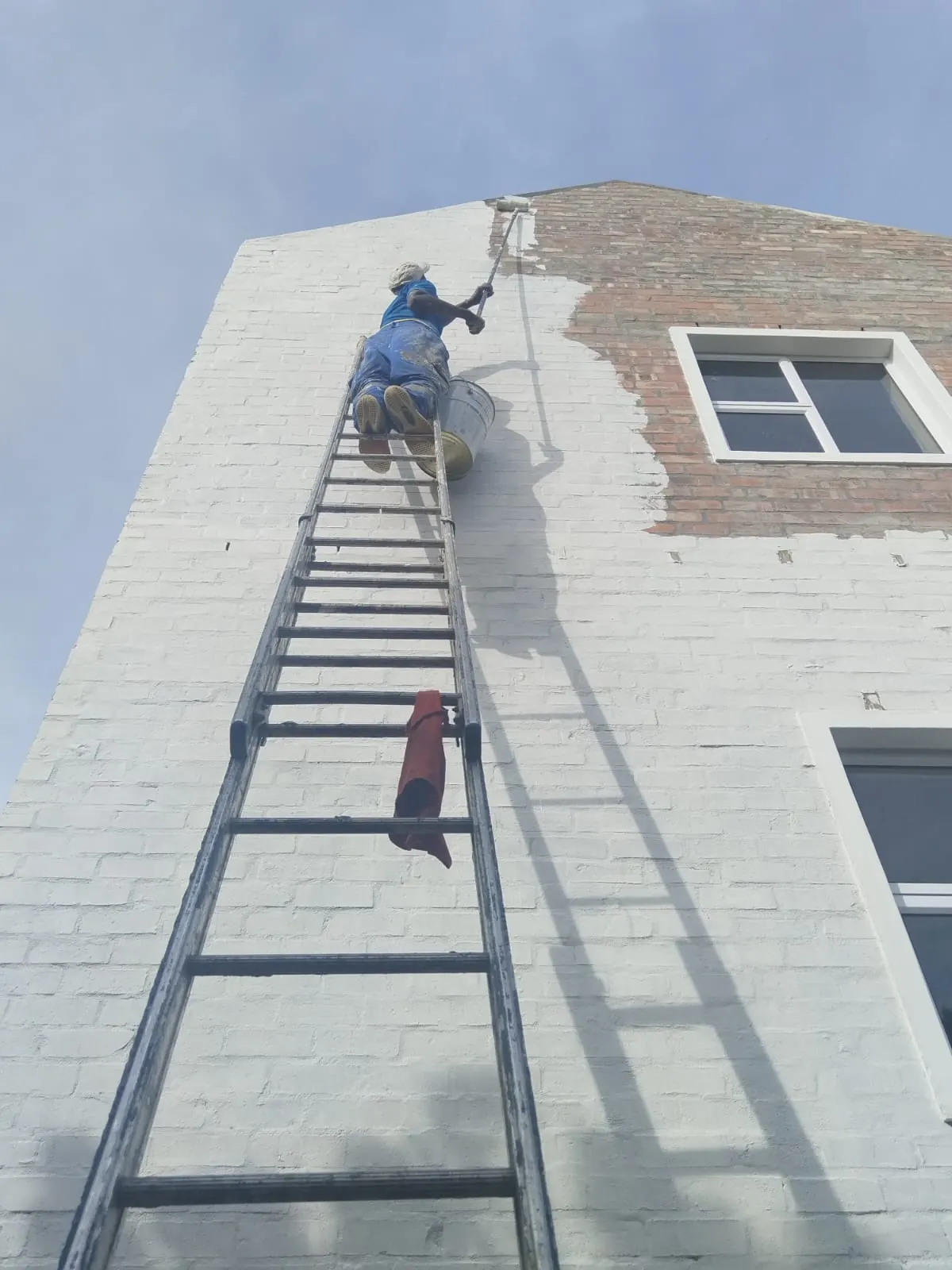
Painting face brick is one of the few decorating decisions you cannot comfortably undo. Once paint is in the pores of the brick, getting back to a clean, natural face is difficult, expensive and often impossible without damaging the brick.
That does not make it wrong. It makes it a decision worth taking slowly.
The honest case for and against painting face brick
Both sides are real. Which one wins depends mostly on the condition of your brickwork.
Good reasons to do it
- Dated or mismatched brick that no longer suits the house, especially after an extension in different brick
- Staining, efflorescence or patch repairs that will never look uniform again
- Unifying a mixed elevation where brick, plaster and cladding all meet
- A lighter, brighter interior, which is why interior brick fireplaces and feature walls are so often painted
Good reasons not to
- It is effectively irreversible. Chemical stripping and abrasive blasting both risk taking the hard fired face off the brick
- You take on maintenance. Unpainted face brick needs almost nothing. Painted brick joins the repaint cycle
- Trapped moisture. Brick and mortar need to breathe. The wrong film-forming paint on a wall that already has moisture will blister
- Sound, attractive brickwork is a finish many buyers value. Painting it is a taste decision applied permanently
If your brick is damp, stop here and deal with the moisture first. Painting a wet wall fails every time, which is covered properly in our waterproofing & painters Cape Town guide.
Preparation and sealing are most of the job
Face brick is porous and the mortar joints are more porous still. Skipping prep is why painted brick sometimes peels in sheets within two years.
- Clean thoroughly. High pressure wash, then remove algae, moss and any efflorescence. Brush salt deposits off dry, do not wash them in.
- Repair the pointing. Rake out and repoint cracked or missing mortar joints and let them cure.
- Let it dry completely. A pressure-washed brick wall needs several dry days before anything is applied.
- Seal or prime. A masonry bonding liquid or alkali-resistant plaster primer soaks in and gives the topcoat something to grip.
- Two topcoats minimum, and expect the first to disappear into the surface.
The paint spec matters as much as the prep. Use a breathable, good quality exterior acrylic for outside walls so moisture vapour can still escape. Avoid heavy impermeable coatings on solid brick walls with no cavity.
What painting face brick costs in South Africa
Bare brick costs more per square metre than smooth plaster, and the reasons are structural rather than a contractor marking it up.
- Face brick and unpainted brick painting typically starts around R150 per m2 in South Africa
- Smooth exterior plaster, by comparison, runs about R35 to R75 per m2 for labour on two coats
- Extra coats: bare brick usually needs a bonding coat plus two topcoats rather than two coats total
- Higher paint consumption: the textured face and open joints hold far more paint per square metre
Rough face brick also increases the true surface area well beyond the flat measurement, which is why a quote based on smooth-wall rates will always come in short. Our house painting cost Cape Town guide sets out the standard per-square-metre bands for comparison.
Living with painted brick afterwards
Plan for the maintenance cycle before you commit, not after.
- Expect to repaint on a similar cycle to any other exterior wall, sooner on weather-exposed elevations
- Watch the joints. Failure usually starts at the mortar, not the brick face
- Keep a record of the exact product and colour for touch-ups
- Do not power wash aggressively once painted, because it lifts the film at the edges
If you want the look changed without the permanence, consider limewashing a small area first or testing a single elevation. A trial panel on the least visible wall tells you more than any colour chart. Our painting team will do a test area before committing the whole house.
Getting a straight answer on your wall
Every face brick wall is different. Age, exposure, mortar condition and whether the wall is solid or cavity all change the right specification.
We do a free assessment with no call-out fee, and we will say plainly if we think your brickwork is better left alone. For help comparing quotes, the painting contractors Cape Town checklist is a good starting point, or send us photographs of the wall and we will come and look at it.
Frequently asked questions
Is painting face brick a permanent decision?
Close to it. Paint soaks into the pores of the brick and the mortar joints, so it cannot simply be washed off later. Chemical stripping and abrasive blasting are both possible but expensive, and both risk removing the hard fired face of the brick, leaving a soft, absorbent surface that looks worse than paint did. Paint performance standards in South Africa are set out by the South African Bureau of Standards.
Do you need to prime or seal face brick before painting?
Yes. Bare brick and mortar are highly porous, so a masonry bonding liquid or alkali-resistant primer is applied first to soak in and give the topcoat something to grip. Without it the topcoat is absorbed unevenly and adhesion is poor, which is the usual cause of painted brick flaking within a year or two.
What paint should be used on face brick?
A breathable good quality exterior acrylic over a masonry primer or bonding liquid for outside walls. Breathability matters because brick and mortar carry moisture vapour, and a heavy impermeable coating on a solid wall traps it and blisters. Interior brick can take a standard acrylic over a universal masonry primer.
How much does it cost to paint face brick in South Africa?
Painting face brick and unpainted brick typically starts around R150 per m2, against roughly R35 to R75 per m2 in labour for two coats on smooth exterior plaster. The gap comes from the bonding primer, the extra coat, the higher paint consumption and the greater real surface area of a textured brick face.
Can painted brick be restored to natural brick?
Rarely to a good standard. Chemical strippers and soda or abrasive blasting can remove most of the paint, but they also tend to damage the fired surface of the brick and erode the mortar joints. The usual outcome is a patchy, porous wall that then has to be painted again, so treat the original decision as final.