
Leak detection Cape Town plumbers carry out costs roughly R1,500 to R4,000 in 2026, depending on property size, method and access. Acoustic detection on its own is quoted from around R850 to R2,500.
That buys you a location, not a repair. Understanding the difference is the single most useful thing to know before you book one.
What leak detection Cape Town homeowners pay in 2026
Local suppliers publish a fairly consistent picture, with the spread driven by method and property size.
- Typical range: R1,500 to R4,000, with some quoting R1,000 to R4,000 and up
- Acoustic detection specifically: R850 to R2,500
- Flat weekday assessment fees: published from around R1,450 to R1,650
- Evenings, weekends and public holidays: higher, with one supplier at R2,200
- The repair afterwards: always a separate quote
If someone quotes one number for finding and fixing a leak they have not seen, treat it as a guess. Nobody knows the repair cost before they know where the pipe is.
Why the range is so wide
- Property size and how much pipework has to be covered
- Whether the leak is inside, under a slab, or in the garden supply
- Access to the affected area
- How many methods are needed before it is located
- Whether you need a written report, for insurance or the City
The three main detection methods
A good technician does not commit to one method. They start with the cheapest that suits the symptom and escalate.
- Acoustic detection. Sensitive microphones listen for the sound of water escaping a pressurised pipe. Best for pipes under floors and behind walls, and usually the first tool out of the van.
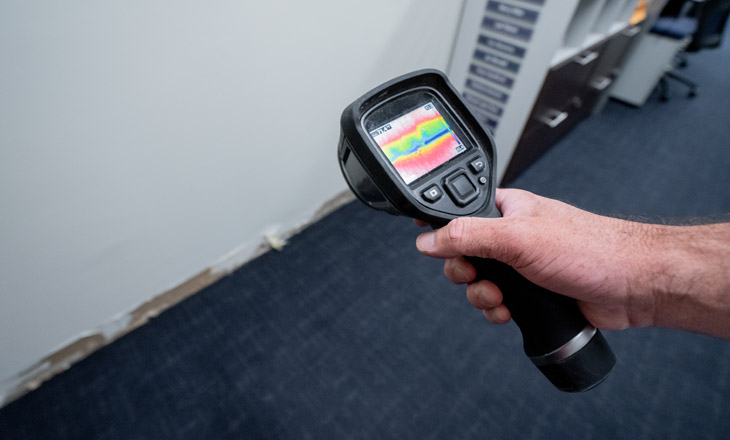
- Thermal imaging. Infrared cameras read temperature differences caused by moving water and damp material. Strong on hot water pipes and moisture mapping across a wall or floor.
- Tracer gas. A safe gas mix is introduced into a drained pipe and detected where it surfaces. Used when acoustic and thermal cannot isolate the point, and effective on small or low-pressure leaks.
Pressure testing and dye testing are used alongside these, particularly on pools where the question is whether the structure or the plumbing is losing water.
Non-invasive really should mean non-invasive
The whole point of paying for detection is to avoid opening five metres of floor to find one wet joint.
- Detection itself should not require breaking tiles, walls or slabs
- Only the confirmed repair point gets opened up
- You should be shown the location before anything is cut
- Making good afterwards is a separate cost, so ask about it upfront
Ask for the leak position to be marked and photographed before work starts. It is your record if the repair does not resolve the problem.
When leak detection is worth paying for
It pays for itself quickly when water is genuinely being lost, because Cape Town’s stepped water tariffs mean a running leak pushes you into higher-priced consumption blocks month after month. Registration is verifiable: check any plumber against the Plumbing Industry Registration Board before work starts.
- Your bill has jumped with no change in household usage
- The meter moves with every tap closed
- There is a damp patch, warm floor area or persistent musty smell
- A pool loses far more than the 1mm to 3mm a day expected from evaporation
- Your insurer wants the leak located and reported before considering a claim
Before booking, run the free meter test yourself. Our guide to water leak detection walks through it and the warning signs that point to a hidden leak.
What to ask before you book
- Which methods are included in the quoted fee?
- Is a written report included, and will it be enough for an insurance claim?
- What happens to the fee if no leak is found?
- Is the repair quoted separately, and when will you get that price?
- Is after-hours or weekend attendance charged differently?
The no-leak-found question matters. A thorough investigation that rules out a leak is still work, and you should know upfront how it is billed.
After the leak is found
Repairs range from a single joint to replacing a run of perished pipe. Where a leak has been running a while, the water damage usually outlasts the plumbing fix.
Damaged walls and ceilings become a plastering job, and rising or lateral damp that keeps returning needs waterproofing rather than paint. Broader plumbing rates are in our plumbers near me cost guide, and the full service list is under plumbing services Cape Town.
We work across Cape Town with a free assessment and no call-out fee. See our plumbing and electrical services or tell us what your meter is doing and we will advise before anyone comes out.
Frequently asked questions
How much does leak detection cost in Cape Town?
Roughly R1,500 to R4,000 in 2026, with some Cape Town suppliers quoting from R1,000 and others publishing flat weekday assessment fees around R1,450 to R1,650. Acoustic detection on its own runs about R850 to R2,500. Evenings, weekends and public holidays cost more, and the repair is always quoted separately.
Can leak detection be done without breaking walls?
Yes. Acoustic listening, thermal imaging and tracer gas are all non-invasive, which is the point of paying for detection rather than opening floors on guesswork. Only the confirmed leak point should be opened up for the repair, and you should be shown the marked location before anything is cut.
How long does leak detection take?
Most residential investigations take a few hours on site, depending on property size and how many methods are needed. A straightforward leak under a floor can be located quickly with acoustic equipment, while an underground supply leak or a low-pressure leak needing tracer gas takes considerably longer.
Is leak detection covered by insurance?
Some household policies cover the cost of locating a leak, and many insurers require the leak to be located and reported before they will consider the resulting damage. Ask your insurer before booking, and ask the plumber for a written report with the leak position marked, since that is what claims are assessed on.
What are the main leak detection methods?
Acoustic detection uses sensitive microphones to hear water escaping a pressurised pipe and suits leaks under floors and behind walls. Thermal imaging reads temperature differences from moving water and damp material. Tracer gas is introduced into a drained pipe and detected where it surfaces, and is used when the first two cannot isolate the point.