


Most disputes over handy man services come down to scope, not price. The homeowner expected a finished result and the contractor quoted a repair. Both were reasonable. Nobody wrote it down.
Here is what is normally included, what usually is not, and the questions that settle it before work starts.
What handy man services normally include
A standard booking covers the labour to carry out the jobs on your list, the contractor’s own tools, and small consumables like screws, plugs and a bit of filler.
- Time on site to do the agreed work
- Tools and equipment
- Minor fixings and consumables
- Clearing up their own mess
What is usually excluded
- Materials of any real value — new handles, sealant, paint, brackets
- Making good — filling is often included, painting over it rarely is
- Removal and disposal of what comes out
- Scaffolding or ladder hire for anything high
- A second visit if paint or filler needs drying time between stages
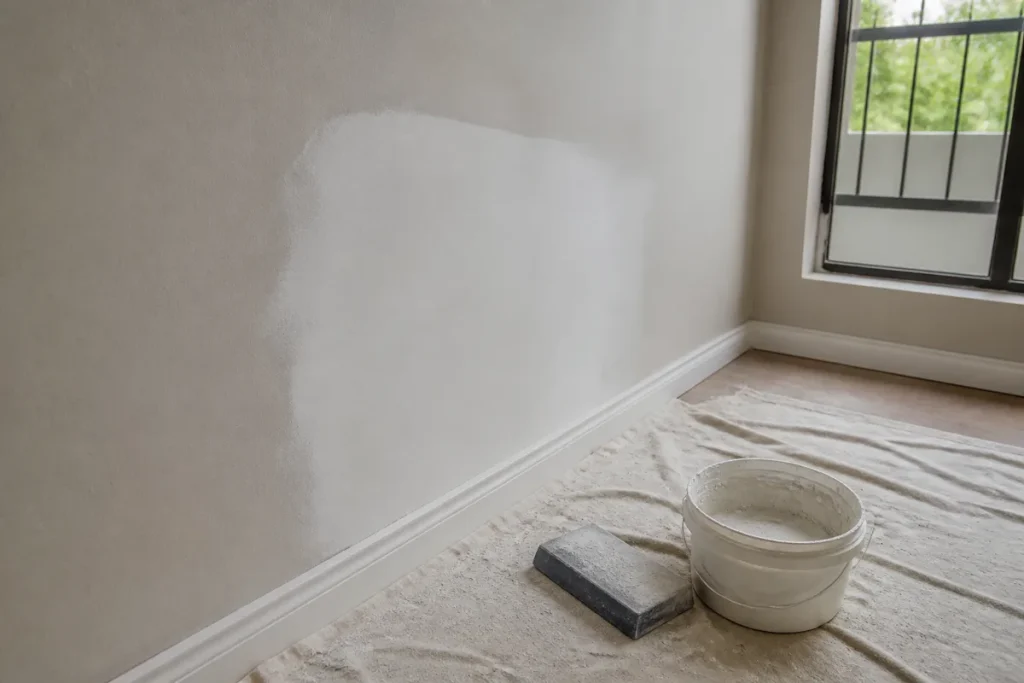
Making good is the big one. “Fill the hole” and “fill the hole so I cannot see where it was” are different jobs. The second needs filler, sanding, priming and paint, often across two visits so each coat can dry.
The drying-time problem nobody quotes for
Filler and paint need time. A patched wall filled at 9am cannot be sanded, primed and painted properly by 11am, however willing everyone is.
On a small repair a contractor will often work around it. On a larger patch, doing it properly means two visits, and the second one costs. Ask upfront whether the quote assumes one visit or two.
Where a whole wall is patchy rather than spot-damaged, filling more of it is the wrong approach entirely. At that point skimming the full surface costs less than repainting twice.
Questions that pin the scope down
- Does the price include materials, and which ones?
- Is making good and painting included, or just the repair?
- Who removes and disposes of what comes out?
- Is this one visit or two?
- Is the quote including or excluding VAT?
- Is there a call-out fee on top?
- What happens if the job runs longer than estimated?
Question seven is worth insisting on. On hourly work, ask for a not-to-exceed figure. A contractor confident in their estimate will give you one, and it converts an open-ended risk into a known ceiling. The trade-offs are covered in our handyman rates guide.
When the job is bigger than it looked
Sometimes opening up a repair reveals a real problem. Good contractors stop and tell you.
- Plaster that sounds hollow has come away from the brick and needs cutting out — replastering, not filling
- Damp that keeps returning needs the cause found, which is waterproofing work
- A crack that reopens after filling means movement, not a surface fault
A handyman who patches over any of those three has taken your money and hidden the problem for a season. One who says “this needs a different trade” is doing the job properly.
Getting the scope right first time
Photograph every job and say plainly what finished looks like to you. If you want a repair invisible, say so. If you are happy to paint it yourself afterwards, say that too — it will bring the price down. Building regulations and permit rules for your property are published by the City of Cape Town.
A scope checklist to send with your enquiry
- Every job listed separately, including the small ones
- A photo of each
- Whether you want it repaired only, or repaired and finished
- Who is buying materials
- Whether anything needs ladder access
- Your suburb and available times
Six lines of detail turns a rough estimate into a firm quote. It also tells you quickly whether the contractor reads properly, which is worth knowing before they are in your house.
Our handyman services page lists what we cover, and you can send your list with photos for a written quote that states the scope.
Frequently asked questions
Do handyman services include materials?
Usually only small consumables like screws, wall plugs and a little filler. Anything of real value — handles, sealant, paint, brackets, timber — is normally quoted separately or bought by you. Agree this before the visit, because contractor-supplied materials carry a markup and self-supplied materials stall the job if you buy the wrong thing.
Does a handyman paint after repairing a wall?
Not automatically. Filling is often included in a repair; sanding, priming and painting over it usually is not. Painting also needs drying time between coats, which can mean a second visit. Say upfront whether you want the repair finished and invisible or just structurally fixed.
What is not covered by a handyman?
Anything needing an electrical or plumbing Certificate of Compliance, work priced by the square metre such as plastering or skimming a whole wall, built-in cupboards, full room repaints, and structural repairs. Disposal of old fittings and scaffolding hire are also usually excluded unless stated.
How do I stop a handyman quote from increasing?
Get the scope in writing, listing each job and whether materials and making good are included. On hourly work, ask for a not-to-exceed figure. Send photos when you enquire so the estimate is based on the actual work rather than a description, and confirm whether VAT is in the quoted price.
Why does a small repair sometimes need two visits?
Because filler and paint need drying time. A patched wall cannot be filled, sanded, primed and painted properly in one sitting — each stage needs the one before it to cure. On small repairs a contractor often works around it, but larger patches genuinely need a return visit for a clean finish.