
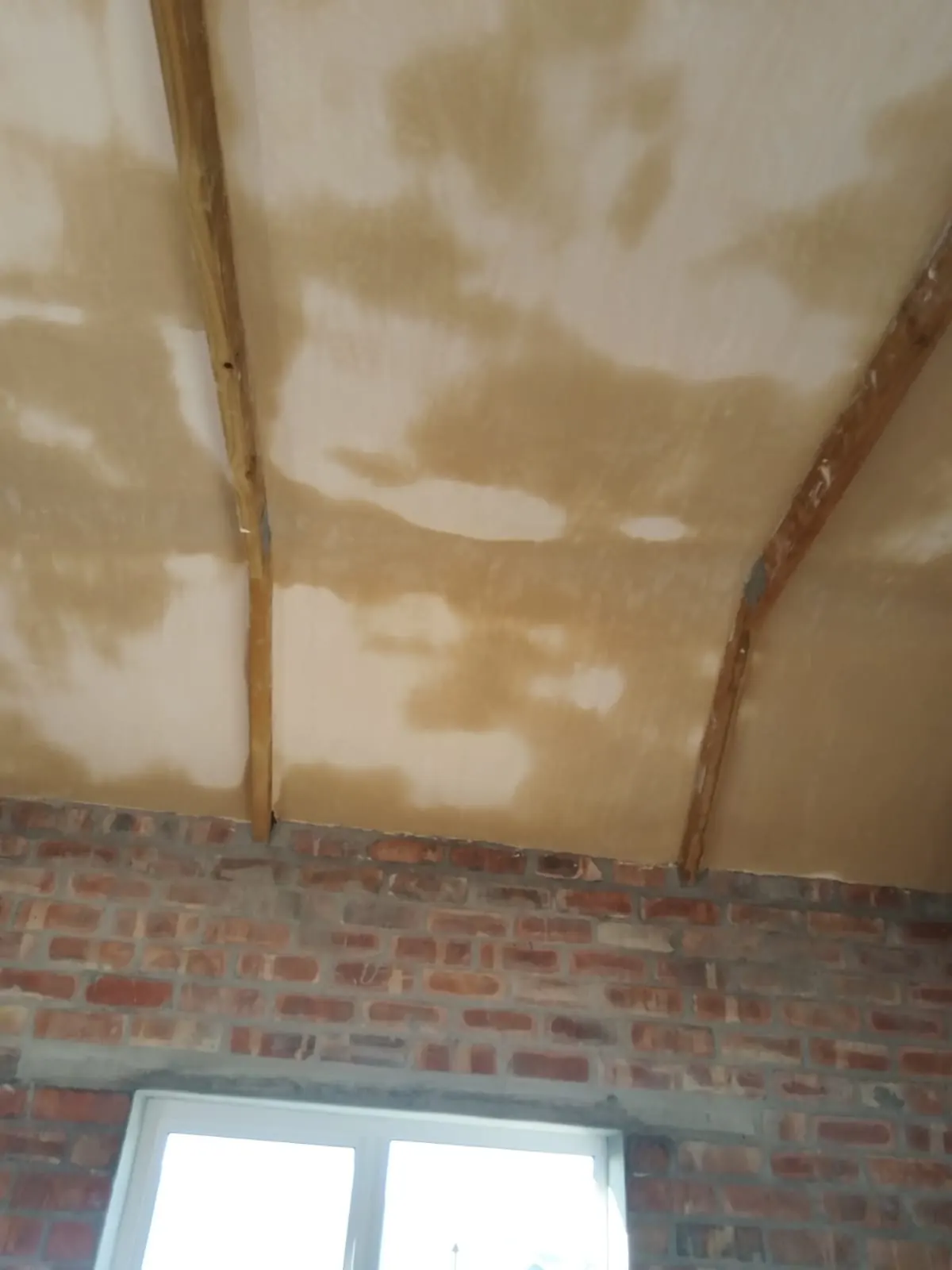
A burst geyser empties 150 litres of hot water into your ceiling and keeps refilling from the mains. Every minute you spend deciding what to do costs you more ceiling, more flooring and more insurance excess.
Do these things in this order. Read the rest afterwards.
Burst geyser: the emergency sequence
- Switch the geyser off at the distribution board. Electricity first, always. A geyser heating an emptying tank destroys the element and creates a real hazard.
- Close the main water stopcock. Usually near the boundary wall by the meter. Turn it clockwise.
- Keep people away from the affected ceiling. Waterlogged ceiling boards collapse without warning.
- Open a hot tap to drain remaining pressure and hot water out of the system.
- Move furniture, rugs and electronics out from under the water.
- Photograph everything before anything is moved further or dried.
- Call your insurer and a plumber. In that order if your policy has an approved-supplier requirement.
Steps one and two are what stop the damage. Everything else is limiting what has already started.
Is it actually burst, or is it something else?
Not every leak from the roof is a failed cylinder, and the difference changes the bill considerably.
- Steady water from the overflow pipe outside: often the pressure relief valve discharging, which can be a valve fault rather than a burst
- Damp patch spreading slowly across a ceiling: could be a fitting, a pipe or the tank
- Water pouring through the ceiling: treat as a burst cylinder
- Ceiling sagging or bulging: stay out of the room and call immediately
A discharging relief valve is doing its job, and it should not simply be capped. Have the cause diagnosed. Our guide to geyser plumbers near me covers how each symptom is diagnosed.
Do not switch it back on
Once the geyser is off, leave it off until a plumber has been. Resetting a tripped geyser breaker repeatedly on an electrical fault is how a bad night becomes a fire.
The insurance evidence you need
A burst geyser is one of the most common household claims in South Africa. Claims get declined on evidence and compliance, not on whether the geyser burst.
- Photograph the damage before anything is dried, moved or repaired
- Photograph the failed unit and parts once removed
- Keep the itemised invoice showing what was replaced and why
- Get the certificate of compliance for the new installation
- Ask whether pre-authorisation is required before work starts
That last point catches people out. Some policies require you to use an approved supplier or get authorisation first, and paying a plumber before checking can leave you funding the job yourself.
What it costs after a burst
- Emergency call-out: R800 to R1,500
- After-hours labour: roughly 1.5 to 2 times standard rates
- Standard 150L electric replacement: roughly R7,000 to R11,000 installed
- Emergency or difficult-access replacement: R10,000 to R16,000 by some 2026 estimates
- Certificate of compliance: R850 to R2,500
A cylinder that has burst is not repairable. The full breakdown of what a new unit costs and what should be itemised sits in our geyser replacement cost guide.
The damage after the water stops
The plumbing bill is often the smaller half. Soaked ceilings, swollen skirting, lifted flooring and stained walls all need attention once things dry out.
- Let the ceiling dry fully before replacing boards, or you seal moisture in
- Check the ceiling insulation, which usually needs replacing after a soaking
- Watch for damp reappearing through fresh paint weeks later
Ceiling and wall repairs afterwards are a plastering job, and persistent damp needs waterproofing rather than another coat of paint.
Preventing the next one
Almost every burst gives warning first. Sediment builds on the element, the tank overheats, pressure climbs and the relief valve starts discharging. That stage can run for months. Registration is verifiable: check any plumber against the Department of Employment and Labour before work starts.
- Fit a drip tray with a routed overflow if there is not one
- Service the geyser annually, at R500 to R3,000
- Replace the anode rod when the service says it is spent
- Plan a replacement past ten years instead of waiting for the failure
Geysers last 8 to 12 years. Replacing one on your terms costs less than replacing it on a Sunday night.
For urgent help see our plumber near me guide, our plumbing and electrical services, or send us the details and we will tell you straight what is needed.
Frequently asked questions
What should I do first when a geyser bursts?
Switch the geyser off at the distribution board first, then close the main water stopcock near the boundary wall by turning it clockwise. Keep everyone away from the waterlogged ceiling, open a hot tap to drain pressure, move furniture clear, then photograph everything before you call your insurer and a plumber.
Does home insurance cover a burst geyser in South Africa?
Most household buildings policies cover a burst geyser, but cover depends on evidence and compliance. Insurers commonly ask for photographs of the damage and failed parts, an itemised invoice and a certificate of compliance for the new installation. Check whether your policy requires pre-authorisation or an approved supplier before work begins.
Can a burst geyser be repaired instead of replaced?
No. If the cylinder itself has failed, it cannot be repaired and the geyser must be replaced. Valves, elements and thermostats are repairable, which is why it is worth having the actual cause diagnosed — water from the overflow pipe outside is often a pressure relief valve rather than a burst tank.
How much does it cost to replace a burst geyser?
A standard 150L electric replacement runs roughly R7,000 to R11,000 installed, but emergency and difficult-access replacements are quoted at roughly R10,000 to R16,000 by some 2026 sources. Add an emergency call-out of R800 to R1,500 and a certificate of compliance at R850 to R2,500 if not included.
Can I use my geyser after the pressure relief valve discharges?
Not until it has been checked. Occasional discharge during heating is normal, but continuous discharge points to a faulty valve or excessive pressure. Leave the geyser switched off at the distribution board and have it diagnosed — capping or blocking the overflow is dangerous and is what turns a valve fault into a burst.