
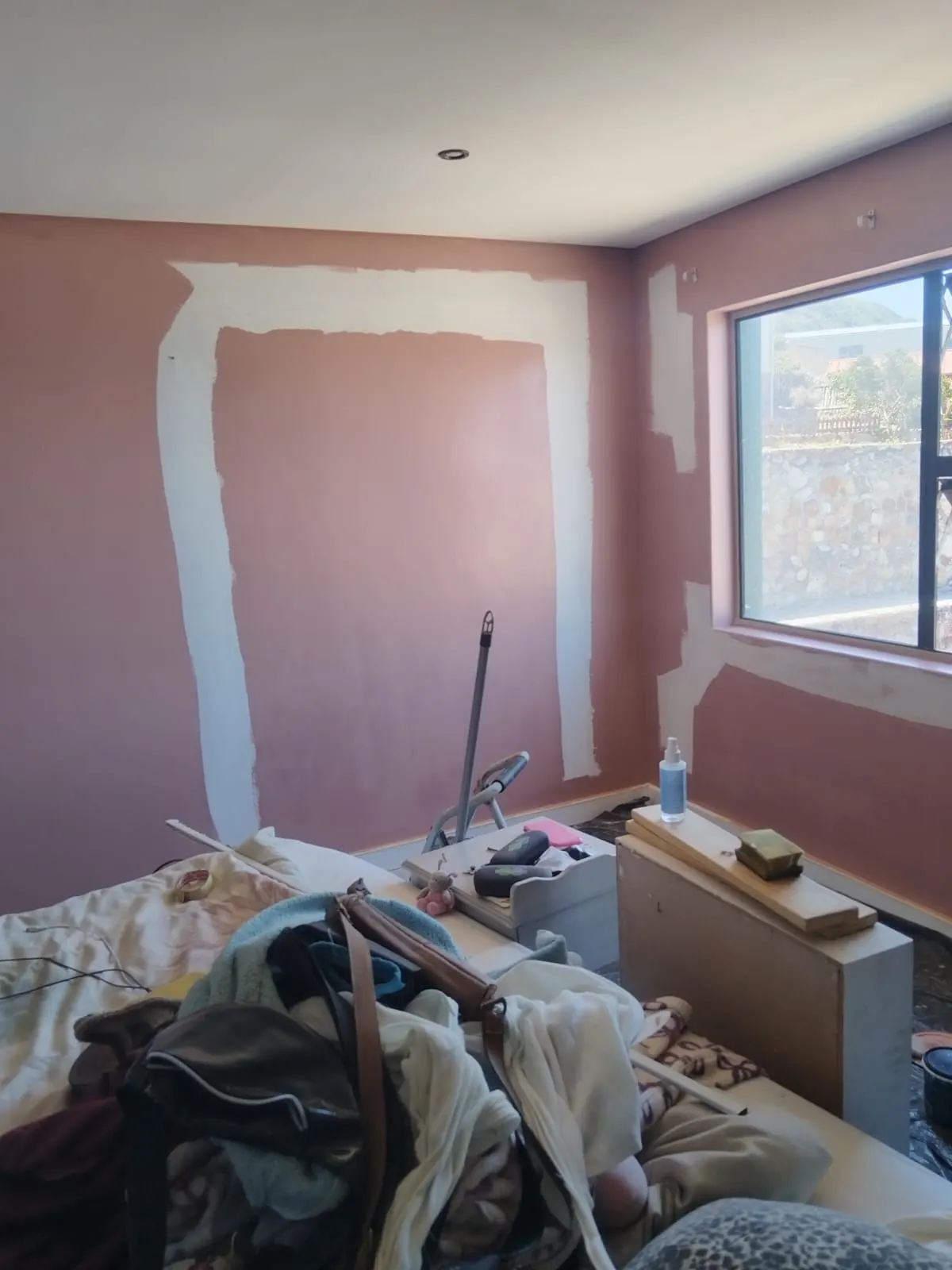
Can waterproof paint walls that are already damp? Honestly, no. Damp-proof paint does not cure rising damp, a leaking pipe or a failed roof detail. At best it holds back surface moisture and hides a stain. At worst it traps water inside the wall and makes the damage worse.
We would rather tell you that up front than sell you a tin. Here is what these products genuinely do, and what actually fixes damp.
What waterproof paint walls treatments can actually do
Damp-proof and waterproof coatings do have legitimate uses. They are just narrower than the marketing suggests.
- Shed rain on the outside face of a sound exterior wall, which is what any good exterior acrylic already does
- Bridge hairline cracks when applied as an elastomeric or flexible coating system
- Isolate salts and stains so old tide marks do not bleed through a new finish
- Contain residual surface moisture on a wall that has already been treated and dried
- Protect exposed parapets and boundary walls that take weather on multiple faces
That last group is real, useful work. Elastomeric exterior coatings on a sound, dry, prepared wall are a sensible specification and part of what proper waterproofing can include.
What it cannot do, and why
It cannot stop rising damp
Rising damp is groundwater drawn up through the masonry because the damp proof course has failed or was never there. The water pressure comes from inside the wall. A film on the surface has nothing to push against.
Coat over it and the moisture simply travels higher and emerges above the painted band, or forces the paint off in sheets. The tide mark moves up the wall. The problem got bigger.
It cannot stop a leak
A leaking pipe, a failed roof flashing, a cracked gutter or a blocked downpipe delivers water continuously. No coating survives that, and covering it hides the evidence you need to find the source.
It cannot fix condensation
Condensation is warm moist indoor air meeting a cold surface. The water forms on the wall, not in it. The fix is ventilation, heating and insulation, not a coating.
It can make things worse
- Trapped moisture saturates the plaster behind an impermeable film
- Salts crystallise under the coating and blow it off along with the plaster face
- Mould grows behind the film where you cannot see it
- Timber skirtings and floors stay wet and start to rot
- Diagnosis gets harder because the visible symptom is gone while the cause continues
This is the core problem with sealing a damp wall: masonry needs to release vapour. If it cannot breathe outward, it pushes the water somewhere else. Our guide to damp proofing Cape Town sets out the proper treatment types.
Breathable coatings: the sensible middle ground
Breathable, vapour-permeable paints let moisture vapour pass out through the film while still resisting liquid water on the surface. They are not a cure either, but they manage a damp-prone wall instead of sealing it.
- Useful on older, solid-wall and lime-plastered buildings
- Sensible on a wall that has been treated and is still drying out
- Reduces the peeling and mould you get from trapping moisture
- Should be paired with ventilation, not used instead of it
If your paint keeps lifting in the same place, that pattern is diagnostic in itself and worth reading up on in our rising damp treatment guide before choosing any coating.
Working out what you are actually dealing with
Three types of damp look similar and need completely different work.
- Rising damp: a tide mark 300 mm to 1 m up from floor level, white salt deposits, worse at skirting height, present year round
- Penetrating damp: isolated patches on external walls, worse after rain, often traceable to a crack, gutter or downpipe
- Condensation: black spot mould in corners, near ceilings, in bathrooms and behind furniture, worse in winter and with windows closed
- Plumbing leak: a patch that stays wet even through a dry spell, sometimes with a rising water bill
Salt crystals mean rising damp almost every time. A patch directly below a gutter joint means penetrating damp. Mould in the corners of a closed-up bedroom means condensation. Paint performance standards in South Africa are set out by the South African Bureau of Standards.
What the real fixes cost in 2026
Proper damp work is more expensive than a tin of paint, and considerably cheaper than replastering a room twice.
- Chemical damp proof course injection: roughly R330 to R660 per linear metre
- Damp treatment and waterproofing before painting: commonly R5,000 to R20,000+ depending on extent
- Replastering after damp repair: priced per square metre, on top of the damp work
- Roof and gutter repairs: often the cheapest fix of all when the cause is penetrating damp
Salt-contaminated plaster usually has to be hacked off and replaced with a salt-retardant render, because the salts keep drawing moisture. That is plastering work, not painting work.
The correct order of operations
- Diagnose — identify which type of damp it is and where the water comes from
- Stop the source — the leak, gutter, downpipe, ground level or missing damp course
- Remove damaged material — hack off blown or salt-contaminated plaster
- Let it dry — roughly a month per 25 mm of wall thickness for saturated masonry
- Replaster where needed, then allow about four weeks curing
- Prime and paint — a breathable system where the wall is damp-prone
Waterproof paint belongs at step six, on a wall that is already dry and repaired. Applied at step one it is money spent to delay the same job. Our waterproofing Cape Town guide covers the cost side of the actual repair.
Where we stand on it
We will apply a waterproof or elastomeric coating where it is the right product for a sound wall. We will not paint over a live damp problem and call it fixed, because it is not.
If you have damp, let us look at it and tell you which of the four causes it is. The assessment is free and there is no call-out fee. See our painting services or send us photos of the wall.
Waterproof paint walls: the short version
If you take one thing from this guide on waterproof paint walls, make it this: get the scope written down before anyone starts. Most disputes about waterproof paint walls come from an unclear brief, not bad work.
We quote waterproof paint walls properly, in writing, after seeing the job. Assessment is free and there is no call-out fee on quoted work.
Frequently asked questions
Does waterproof paint stop rising damp?
No. Rising damp is groundwater drawn up through the masonry because the damp proof course has failed or is missing, so the pressure comes from inside the wall. A surface film has nothing to push against. The moisture emerges higher up or forces the paint off, and the affected area typically gets larger.
Can I paint over a damp wall?
You can, but you should not. Paint on a damp wall traps moisture in the plaster, salts crystallise under the film and blow it off, and mould grows out of sight behind it. It also hides the symptom you need in order to find the cause. Fix the source, dry the wall, then paint.
What is damp proof paint actually for?
It contains residual surface moisture, isolates salts so old stains do not bleed through, and protects sound exterior walls and parapets from rain. Used on a wall that has already been treated and dried, it is a sensible final step. Used as the treatment itself, it fails.
Is breathable paint better for damp walls?
Better than a sealing coating, yes, but it is not a cure. Breathable paint lets moisture vapour escape through the film instead of trapping it, which reduces peeling and mould on damp-prone or older solid-wall buildings. It should be combined with ventilation and proper damp treatment, not used instead of them.
How much does it cost to fix rising damp in South Africa?
Chemical damp proof course injection runs roughly R330 to R660 per linear metre. Damp treatment and waterproofing ahead of a repaint commonly comes to R5,000 to R20,000 or more depending on extent, plus replastering where salt-contaminated plaster has to be hacked off and replaced.