
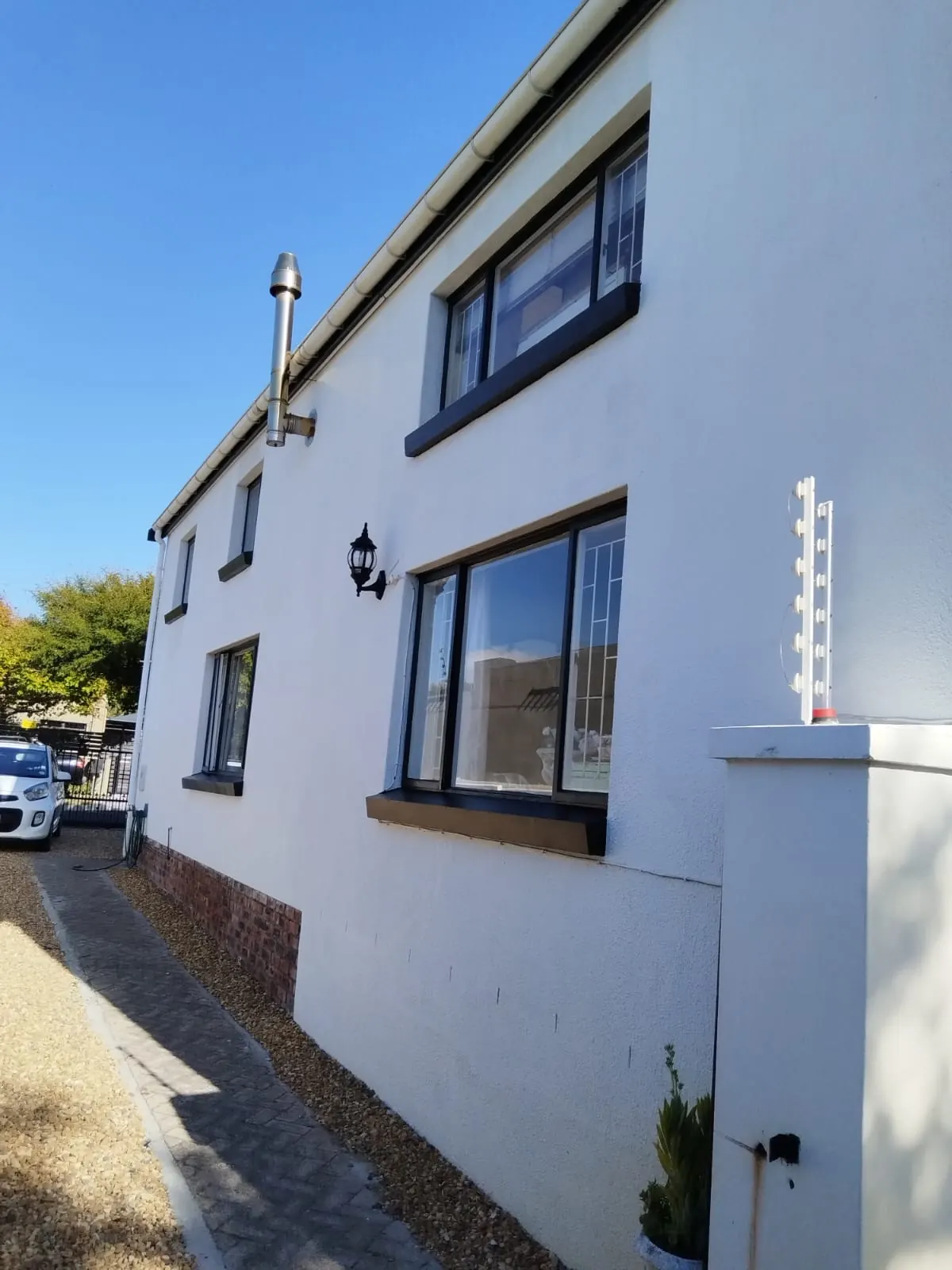
Almost all peeling paint causes come down to one thing: the paint film lost its grip on whatever is underneath it. Moisture, dust, chalk or the wrong product got in between the coating and the wall.
The fix depends entirely on which one it is. Sanding and repainting a damp wall wastes the money twice, so diagnosis comes first.
The five most common peeling paint causes
1. Moisture behind the wall
This is the leading cause in Cape Town homes, especially after winter. Water moving through the wall pushes outward and lifts the paint from behind.
- Rising damp: a tide mark rising 300 mm to 1 m from the floor, often with white salt deposits
- Penetrating damp: patches on the inside of an external wall, worse after rain
- Plumbing leaks: a localised patch that stays wet in dry weather
- Condensation: peeling near ceilings, in bathrooms and behind furniture on cold walls
Salt crystals mean rising damp almost every time. That needs a damp diagnosis, not a paintbrush, and our rising damp treatment guide covers what the real repair involves and costs.
2. Painting over a dirty or chalky surface
Rub an old exterior wall with your palm. A white chalky residue means the binder has broken down. New paint applied over that sticks to the chalk, and the chalk sticks to nothing.
- Dust, cobwebs and pollution film on exterior walls
- Kitchen grease on interior walls
- Chalking from an old, sun-degraded coating
- Mould and algae growth on shaded walls
3. No primer or sealer
Bare plaster, filler and skim coats are porous and slightly alkaline. Paint applied straight onto them is absorbed unevenly and never forms a proper bond.
4. The wrong paint for the surface
- Interior paint used outside, where it cracks in the first summer
- Water-based paint applied over old oil-based enamel without an adhesion primer
- Cheap PVA over a high-movement or high-exposure surface
- Non-breathable coatings on walls that need to release vapour
5. Painting in the wrong conditions
Paint applied in direct summer sun skins over before the underside dries, which traps solvent and gives blisters. Paint applied on a damp or cold wall never bonds. In the Western Cape the reliable exterior window is roughly October to April.
Peeling versus bubbling: they are not the same signal
The failure pattern tells you a lot before you touch anything.
- Bubbling that appears soon after painting: heat, moisture in the substrate, or coats applied too quickly on top of each other
- Bubbling months later, with soft wall behind: water in the wall, almost certainly damp
- Peeling in large clean sheets: a bond failure, usually chalk or no primer
- Flaking in small brittle chips with layers visible: old built-up coatings that have gone hard and lost flexibility
- Peeling only in one room or one patch: a localised leak or a condensation cold spot
Break a bubble open and feel the plaster. Damp and crumbly means water. Dry and dusty means preparation. That single test decides your next step. Paint performance standards in South Africa are set out by the South African Bureau of Standards.
How to fix peeling paint properly
Never start with paint. Start with the cause, then repair, then coat.
- Find and stop the moisture — fix the leak, gutter, downpipe or damp course first, and let the wall dry out fully
- Scrape back to sound material — everything loose comes off, feathering the edges into firm paint
- Wash the surface — sugar soap for grease and grime, a fungicidal wash for mould, then rinse and dry
- Repair the substrate — fill cracks and holes, and re-plaster where the render has blown
- Sand and dust off — a smooth, feathered, clean surface with no ridges
- Prime — plaster primer on bare areas, bonding liquid over chalky surfaces
- Repaint — two full coats of the correct grade for that surface
Where the plaster itself has blown or cracked through, filling will not hold. That is a plastering repair, and larger movement cracks are covered in our guide to wall crack repair.
Drying times nobody wants to hear
A wall that has been wet needs time. Rushing this is why the same patch peels again.
- After a leak is fixed: allow weeks, not days, before coating
- After replastering: new plaster needs roughly 4 weeks to cure before painting
- Rule of thumb for saturated masonry: around a month of drying per 25 mm of wall thickness
If the schedule cannot wait, a breathable coating lets the remaining moisture out instead of trapping it. What it cannot do is fix the damp, and recurring damp needs proper waterproofing to sort out.
When to call a painter
Small dry patches from bad prep are a reasonable weekend job. Call someone in when the peeling keeps returning to the same place, when there are salt deposits or a tide mark, when large areas of plaster sound hollow, or when the wall is high enough to need scaffolding.
We diagnose the cause before quoting the paint, because coating over damp is not a repair. See our painting services or send us photos for a free assessment with no call-out fee.
Frequently asked questions
What causes peeling paint on walls and how do you fix it?
Moisture in the wall, a dirty or chalky surface, no primer, the wrong paint grade, or painting in poor conditions. Fix the cause first, then scrape back to sound material, wash, repair the plaster, sand, prime and apply two coats of the correct paint. Painting over the cause simply repeats the failure.
Why is my paint peeling off so easily?
Because it never bonded. If it comes away in large clean sheets and the wall behind is dry and dusty, the surface was chalky, dirty or unprimed when it was painted. If the wall behind is soft or damp, water is pushing the film off from underneath and the moisture source has to be found first.
Why is paint bubbling on my walls?
Bubbles right after painting usually mean heat, a damp substrate or coats applied before the previous one dried. Bubbles months later with soft plaster behind mean water in the wall. Break one open and feel the surface: damp and crumbly points to a moisture problem, dry and dusty points to preparation.
Can I just paint over peeling paint?
No. New paint bonds to whatever it lands on, so painting over a loose flake simply bonds to the flake. Everything loose must be scraped back to firm material and the edges feathered smooth, otherwise the repair telegraphs through the new coat and lifts again within a season.
How long should I wait before painting a wall that had damp?
Longer than most people expect. After a leak is repaired, allow weeks rather than days, and new plaster needs roughly four weeks to cure before paint. A rough guide for saturated masonry is about a month of drying per 25 mm of wall thickness. Coating too early traps moisture and the paint fails again.