
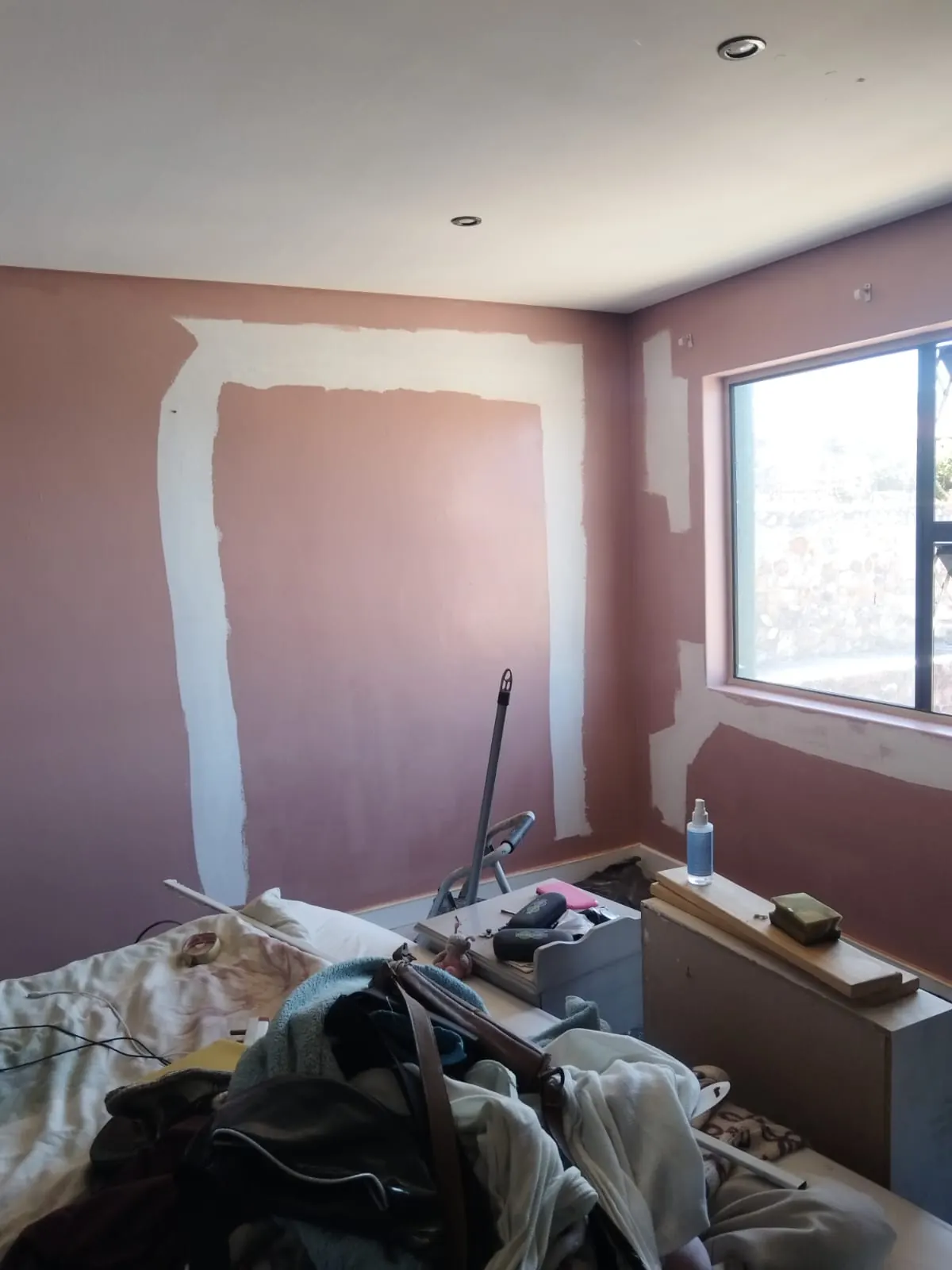
The interior vs exterior paint question comes up in every paint aisle, and the honest answer is that they are genuinely different products. Same colour, same tin size, different chemistry and a difference in price of R30 to R60 per litre.
Exterior paint is built to flex, shed water and survive ultraviolet light. Interior paint is built to be scrubbed, to smell mild and to look flat and even under indoor lighting. Here is what that means in practice.
What actually differs between interior vs exterior paint
Nearly all modern wall paint uses an acrylic binder carried in water. The recipe around that binder is where the two part ways.
- Resin flexibility: exterior binders are softer so the film can expand and contract with the wall through hot days and cold nights
- UV stabilisers: exterior paints carry additives that slow pigment fade and binder breakdown in sunlight
- Fungicides and algaecides: standard in exterior paint, so that shaded south-facing walls resist mould and green growth
- Water resistance: exterior films shed rain while still allowing vapour out of the wall
- Scrub resistance: interior paints are formulated to survive repeated cleaning without burnishing
- Odour and emissions: interior paints are made low-odour and low-VOC for enclosed rooms
Sheen levels tell you something too
- Matt: hides wall imperfections, most common on interior walls and ceilings
- Sheen or eggshell: slightly reflective, easier to wipe, the usual exterior wall choice
- Semi-gloss and gloss: trim, doors and frames, inside and out
Can you use exterior paint indoors?
You physically can, but it is a poor idea. Exterior paint carries higher solvent and additive loads, so it takes longer to cure and smells stronger for longer in a closed room.
Those biocides are also formulated for outdoor exposure, not for a bedroom you sleep in nightly. And exterior sheen levels tend to highlight every imperfection in an interior wall rather than hiding it.
Can you use interior paint outdoors?
This is the more expensive mistake. Interior paint has no meaningful UV protection and a stiffer, less flexible film.
- It fades noticeably within a single Cape Town summer
- The film cracks as the wall moves through daily heat cycles
- Water gets behind the cracks and the coating lifts in sheets
- You repaint within one to two years instead of five to seven
We see this most often on garden walls and garage surrounds where leftover interior paint got used up. If that has already happened, the failure pattern is diagnosed in our guide to painting costs and repair work.
What each one costs in 2026
Exterior paint costs more per litre because of what is in it, and exterior labour costs more because of access and preparation.
- Interior painting: roughly R25 to R55 per m2 labour, or R50 to R120 per m2 with paint
- Exterior painting: roughly R35 to R75 per m2 labour, or R70 to R160 per m2 with paint
- 20 litre premium exterior acrylic: around R2,000 to R2,900 retail
- Coverage: both types cover 10 to 12 m2 per litre per coat on sealed surfaces
Lifespan is where exterior paint earns its premium. A standard exterior acrylic gives 4 to 7 years and a premium or elastomeric system 8 to 10, always assuming the wall was prepared properly. Our house painting cost Cape Town breakdown shows how that plays out over a full repaint cycle.
Where each type belongs in a Cape Town home
Use exterior paint on
- All external plastered walls and gables
- Boundary and garden walls, both faces
- Garages, outbuildings and carport soffits
- Balconies, parapets and exposed stair walls
Use interior paint on
- Internal walls and ceilings
- Passages, cupboards and stairwells
- Bathrooms and kitchens, using a moisture-resistant interior grade
The awkward in-between areas
Covered patios, entrance porches and enclosed stoeps get wind-driven rain and strong reflected light. Treat them as exterior. A garage with a permanently open door is exterior too.
Coastal homes are a special case. Salt-laden air near the Atlantic Seaboard and False Bay attacks coatings faster, which is covered properly in our painting contractors Western Cape coastal guide.
Primers, sealers and why they are not optional
Neither interior nor exterior paint is designed to bond directly to bare plaster, filler or chalky old coatings. That is what a plaster primer or bonding liquid is for. Paint performance standards in South Africa are set out by the South African Bureau of Standards.
- New plaster needs a plaster primer once it is fully cured
- Chalky old paint needs a bonding liquid after washing
- Filled and sanded patches need spot priming or they flash through the topcoat
- Bare timber and metal need their own dedicated primers
Skipping the primer is the single most common reason a good paint fails early. If the plaster underneath is uneven or damaged, it needs skimming before any coating goes near it.
Getting it specified correctly
A proper quote names the actual product for each surface, not just “two coats”. That is how you check that exterior grade is going on outside and the right interior grade inside.
We supply and apply both, and we will tell you when a cheaper product is genuinely fine for the surface. See our painting services or send us the details for a free assessment with no call-out fee.
Frequently asked questions
What is the difference between interior and exterior paint?
Exterior paint uses a more flexible binder plus UV stabilisers, fungicides and water-shedding additives so it survives sun, rain and daily temperature swings. Interior paint is formulated for scrub resistance, low odour and a flat even finish indoors. Same colour range, different chemistry and a real price gap.
Can you use exterior paint inside your house?
You can, but it is not advisable. Exterior paint takes longer to cure indoors, smells stronger for longer in a closed room, and carries biocides intended for outdoor exposure. Its sheen also tends to highlight imperfections in interior walls rather than hiding them the way an interior matt does.
Can I use interior paint outside?
No, not sensibly. Interior paint has no meaningful UV protection and a stiffer film, so it fades within a summer and cracks as the wall expands and contracts. Water gets behind the cracks and the coating lifts in sheets, meaning a repaint in one to two years instead of five to seven.
Is exterior paint more expensive than interior paint?
Yes, both in materials and labour. A 20 litre premium exterior acrylic runs about R2,000 to R2,900. Exterior labour is roughly R35 to R75 per m2 against R25 to R55 per m2 inside, because of access, preparation and weather. The extra buys 4 to 7 years of service, or 8 to 10 with premium systems.
Do I need a primer before painting?
On bare plaster, filler, chalky old paint, timber or metal, yes. Paint is not designed to bond directly to those surfaces. Use a plaster primer on new plaster, a bonding liquid over chalky coatings and spot priming on filled patches. Skipping this step is the most common reason good paint fails early.