
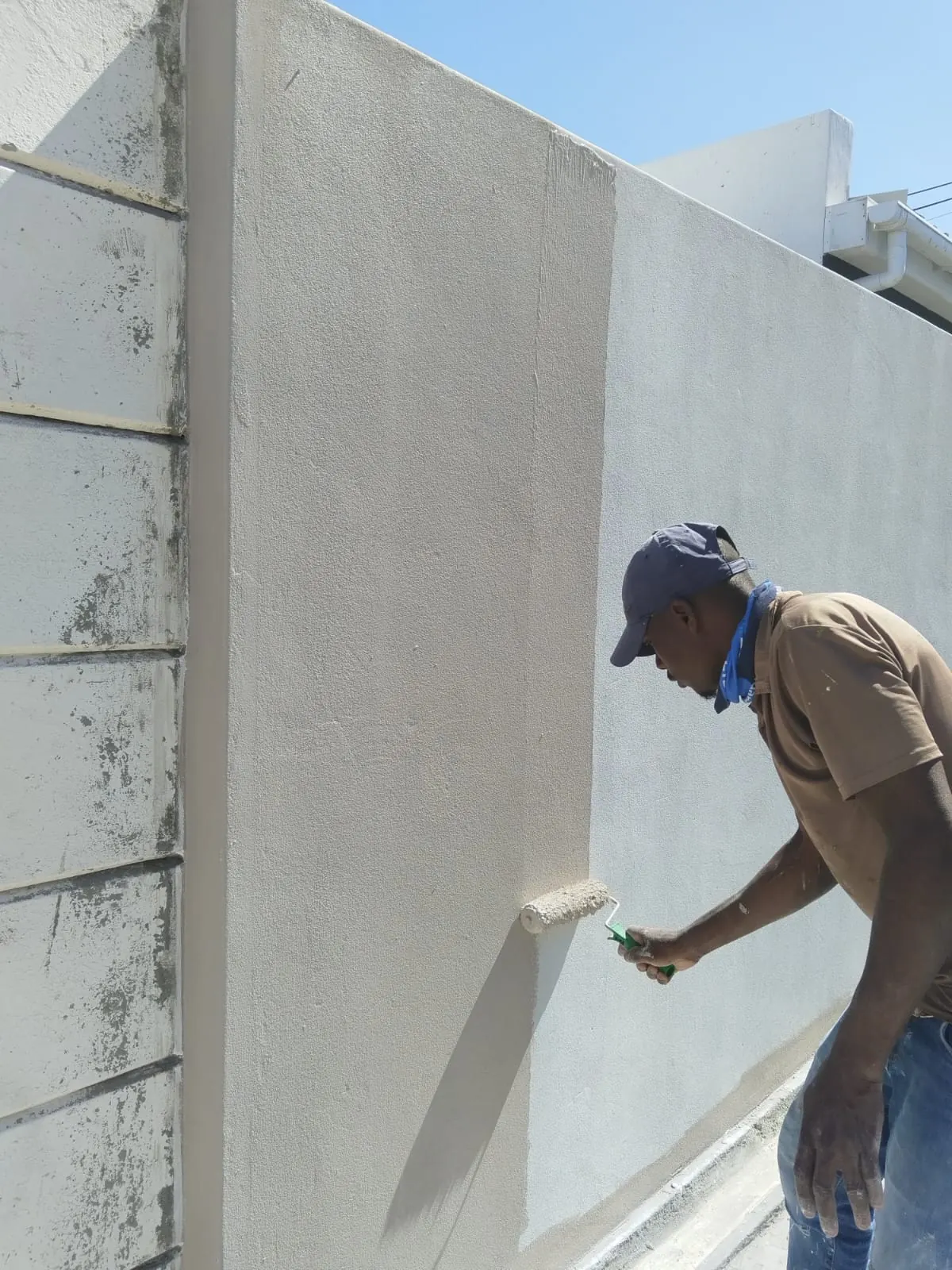
Plastering sand is a fine, washed sand used to mix wall plaster. A 40kg bag costs roughly R30 to R45 at the big South African retailers, and bulk sand runs around R900 per cubic metre delivered.
It is not the same product as building sand, and swapping them is one of the quickest ways to end up with a wall you cannot trowel smooth.
What plastering sand actually is
It is a fine aggregate, screened and washed, that complies with SANS 1090 for plaster and building sands.
- Fine grading — the particles are small and evenly sized
- Washed — salts, silt, clay and organic matter removed
- Workable — it spreads and floats smooth on the trowel
- Lower shrinkage — because the clay content is controlled
Building sand is coarser and more angular. It is right for mortar and for laying bricks, and wrong for plaster because it will not float to a smooth face.
Washed versus pit sand
In some regions plaster sand is sold as pit sand or fine sand. Pit sand straight from the ground can carry clay and salt, and both cause problems: clay increases shrinkage cracking, and salt causes efflorescence later.
Ask the supplier directly whether the sand is washed and suitable for plastering. On a coastal Cape Town job, unwashed sand is a false economy.
Plastering sand prices in 2026
Two ways to buy it, and the price gap between them is large.
- 40kg bag: around R30 at Leroy Merlin, R38 to R39 at Builders and Cashbuild
- Bulk per cubic metre: roughly R900 delivered, with a typical minimum load of 3m3
- Half cube: around R1,200 at some retailers
Independent yards advertise lower bulk figures, sometimes near R500 a cube in some areas, so it is worth phoning two or three local suppliers. Delivery, load minimum and access all move the final number.
Bag versus bulk, in real terms
A cubic metre of plaster sand weighs about 1,500 to 1,600kg. That is around 38 to 40 bags of 40kg.
- Buying that in bags at R38: roughly R1,450 to R1,520
- Buying it in bulk at R900: roughly R900
Bulk is clearly cheaper per cube, but you need somewhere to tip it and a minimum load is usually three cubic metres. For a single wall or a patch, bags win on convenience and waste.
How much plastering sand you need
The published quantities for 15mm thick plaster over 100 square metres are fixed.
- Internal, common cement: 2.3m3 sand plus 600kg cement
- External, common cement: 2.25m3 sand plus 700kg cement
- External, masonry cement: 2.25m3 sand plus 850kg cement
Roughly, that is 0.023 cubic metres of sand per square metre of wall at 15mm. Multiply your wall area by 0.023, then add 10% for wastage. Mix ratios and workmanship standards are published by the NHBRC.
A worked example
- Wall area: 40m2 after deducting a door and window
- Sand: 40 x 0.023 = 0.92m3
- Add 10% wastage: about 1.0m3
- In bags: roughly 38 to 40 bags of 40kg
- In bulk: one cubic metre, though most yards have a 3m3 minimum
At that size the decision is genuinely close. Under about 20m2, buy bags. Over 100m2, order bulk. The cement side of the calculation is in our cement plaster mix ratio guide.
Where to buy it in Cape Town
- Retail chains — Builders, Cashbuild and Leroy Merlin stock 40kg bags and some bulk
- Sand suppliers — cheaper per cube, next-day delivery, minimum loads apply
- Local builders’ yards — often the best price on small bulk loads
Before ordering bulk, check three things: where the load can be tipped, whether the truck can reach it, and whether you have somewhere to cover it. Uncovered sand in a Cape Town winter absorbs water and throws your mix off.
Storing it properly
- Tip onto a slab or heavy plastic, never bare soil
- Cover it against rain and against wind-blown contamination
- Keep it away from the base of walls so it does not wick damp
Getting the material right
Sand is the cheapest part of the job and the fastest way to ruin it. Fine, washed and SANS-compliant is the whole specification, and a supplier who cannot confirm that is worth avoiding.
If you would rather not manage deliveries at all, our brickwork and plastering quotes include materials, so the sand, the cement and the wastage are our problem. See the rates in our plastering prices guide, or the process in the plastering walls comparison.
Assessment is free with no call-out fee. Send us your measurements and we will quote materials and labour separately.
Frequently asked questions
What type of sand can I use to plaster a house?
Use plaster sand, sometimes sold as fine sand or pit sand. It is finer than building sand and washed to remove salts, silt and clay, which is what lets it float smooth on the trowel and keeps shrinkage down. Coarse building sand is for mortar and bricklaying and produces a rough, unworkable plaster. For the full picture, see our article on plastering.
What is the difference between plaster sand and building sand?
Grading and cleanliness. Plaster sand is finer and washed so it produces a smooth, crack-resistant finish, while building sand is coarser and more angular for mortar strength. Both should comply with SANS 1090. Using building sand for plaster gives a gritty face that will not trowel flat.
How much plastering sand do I need per square metre?
About 0.023 cubic metres per square metre at 15mm thickness, based on the published South African quantity of roughly 2.25 to 2.3 cubic metres per 100 square metres. Multiply your net wall area by 0.023 and add 10% for wastage. A 40 square metre wall therefore needs about one cubic metre of sand.
How much does plaster sand cost in South Africa?
A 40kg bag runs roughly R30 to R45 depending on retailer, with Builders and Cashbuild around R38 and Leroy Merlin nearer R30. Bulk sand is about R900 per cubic metre delivered, usually on a three cubic metre minimum load. Independent yards often quote less, so it is worth phoning around locally.
Is it cheaper to buy plaster sand in bags or in bulk?
Bulk, by a wide margin. A cubic metre weighs about 1,500 to 1,600kg, which is 38 to 40 bags, so buying it bagged costs roughly R1,450 against about R900 in bulk. Bulk only works if you can take a three cubic metre minimum load and have somewhere to tip and cover it, so bags still suit small jobs.