
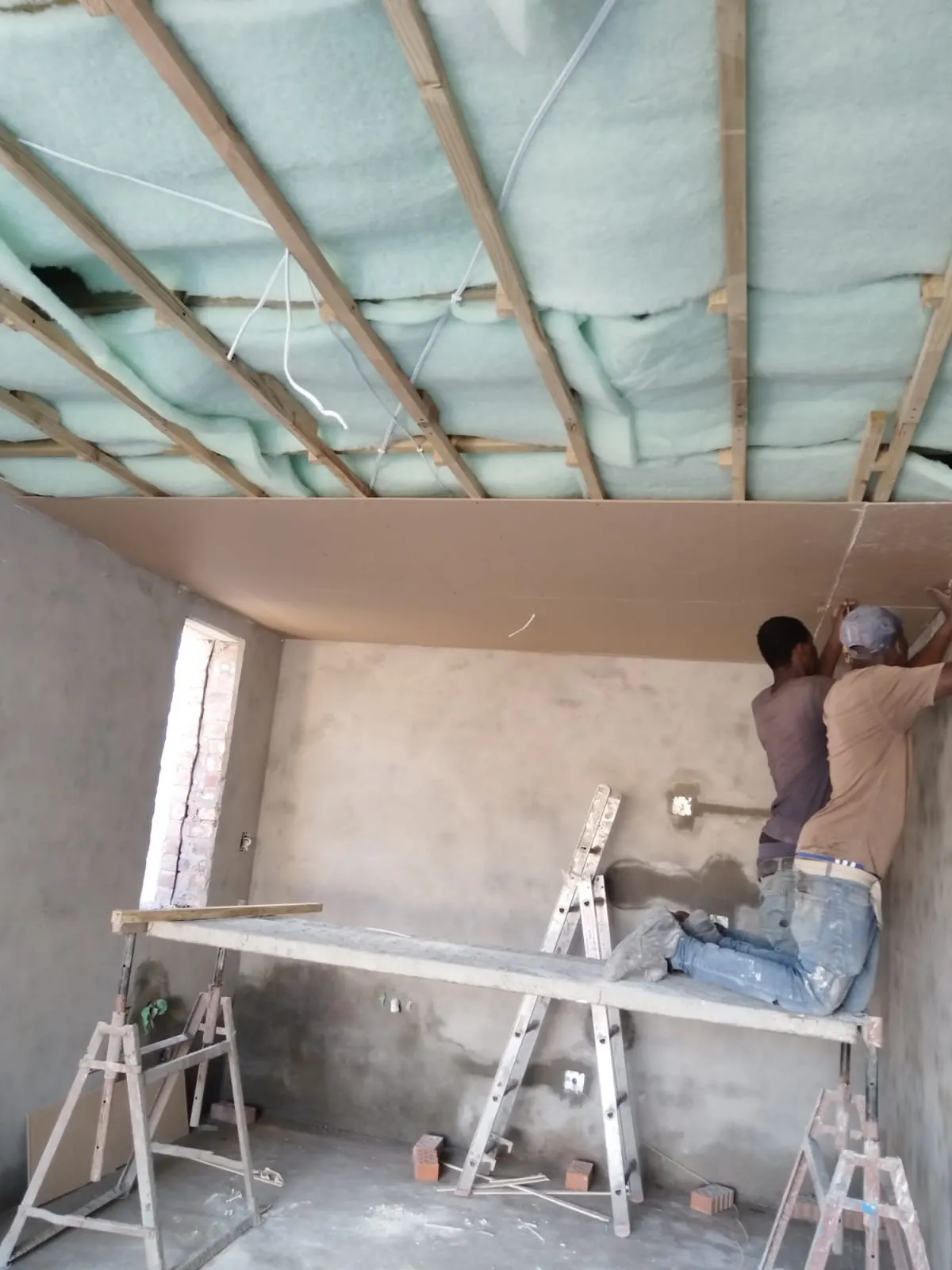
Plastering walls inside a Cape Town house and plastering the outside of it are two different specifications. Inside runs R90 to R160 per square metre. Outside runs R130 to R200, and the gap is not profit.
Exterior work uses a stronger mix, a waterproofing additive, more preparation and often scaffolding. Here is how the two compare, item by item.
Plastering walls inside: what the specification is
Interior plaster has one enemy, and it is not weather. It is the eye. Every ripple shows once a light is switched on beside it.
- Mix: 1:5 cement to plaster sand with common cement
- Thickness: roughly 15mm total across two coats
- Finish: floated smooth, or skimmed afterwards for a glass finish
- Additives: normally none
Because the mix is weaker, it shrinks less and cracks less. Interior walls are not carrying rain load, so strength is not the priority — flatness is.
Where interior plaster gets upgraded
Two rooms break the rule. Bathrooms and kitchens see steam, splash and repeated cleaning, so a stronger mix and a proper waterproof layer behind tiling are worth the small extra cost.
Plastering walls outside: a different job
Exterior plaster is a weather barrier that happens to be flat. The mix is richer, at 1:4.5 with common cement or 1:3.5 with masonry cement, and it usually carries a waterproofing additive.
- Full surface preparation: cleaning, bonding agent, tie holes, old cracks
- Two coats, total thickness typically 15 to 20mm
- A float finish rather than a polished one, so paint grips
- Scaffolding on double storey, about R8 to R15 per square metre
A polished exterior finish looks impressive and holds water in the surface. Float it. The full mix figures are set out in our cement plaster mix ratio article.
The Cape Town coastal problem
Salt is the variable that inland guides ignore. From Table View round to Muizenberg, wind-borne salt lands on external walls constantly and works into the plaster.
- Salt crystallises inside the plaster and pushes the surface off in flakes
- Efflorescence — white powdery bloom — signals salts moving through the wall
- Paint fails first on the seaward elevation, years before the others
- Wind-driven rain finds any hairline crack on the south-east face
The defences are unglamorous: a properly specified mix, a waterproofing additive, full curing, and not skipping the second coat. There is no coating that rescues thin, under-cured exterior plaster. Mix ratios and workmanship standards are published by the NHBRC.
What we see fail most on the Peninsula
- Single-coat exterior plaster applied to save money
- Plaster taken down to ground level with no clearance, wicking moisture up
- Cracks filled and painted while the source of movement is untouched
- Painting inside the 28-day cure window before a summer season
Side by side comparison
- Mix strength: interior 1:5 — exterior 1:4.5, richer
- Thickness: interior about 15mm — exterior 15 to 20mm
- Additive: interior none — exterior waterproofer
- Preparation: interior light — exterior extensive
- Access cost: interior none — exterior scaffolding on upper floors
- Rate 2026: R90 to R160 per m2 — R130 to R200 per m2
Full rates including ceilings are broken down in our plastering prices guide, and the general process is covered in the wall plastering overview.
Which one does your wall need?
A quick way to decide, before anyone quotes.
- Is it exposed to rain? Then it is exterior specification, even a garage side wall.
- Is the existing plaster sound? Tap it. Hollow means hack off, not skim over.
- Is there damp at the base? Fix that before plastering anything.
- Do you want a mirror finish inside? Then budget for skimming on top.
Boundary walls count as exterior on both faces, which surprises people when the quote arrives. So do parapets and the inside of an open braai area.
Materials and timing
Both jobs use the same plastering sand, washed and fine, not coarse building sand. Only the cement proportion and the additives change between them.
Timing matters in Cape Town. Exterior plaster applied into a strong south-easter dries too fast and crazes, and work in the wet winter months needs cover. Autumn and spring are the easy windows.
Our brickwork and plastering team quotes interior and exterior separately so you can stage the work across two budgets if needed. Assessment is free with no call-out fee — tell us what needs doing.
Frequently asked questions
How do you plaster an outside wall?
Clean the wall, deal with cracks and tie holes, apply a bonding agent on smooth surfaces and wet down normal brickwork. Then apply a scratch coat of roughly 12mm using a 1:4.5 cement to plaster sand mix with a waterproofing additive, key it before it sets, and follow with a finer finish coat floated smooth. Keep it damp for three to seven days afterwards.
Is exterior plastering more expensive than interior?
Yes, R130 to R200 per square metre outside against R90 to R160 inside in 2026. The difference comes from a richer mix, a waterproofing additive, much heavier surface preparation and scaffolding on anything above ground floor, which adds roughly R8 to R15 per square metre on its own.
What mix should be used for external plaster?
One part common cement to 4.5 parts plaster sand, or one part masonry cement MC 22,5X to 3.5 parts sand. That is richer than the 1:5 internal mix because the wall has to resist wind-driven rain. Do not go richer still, as an over-cemented mix shrinks aggressively and cracks across the whole elevation.
Why does plaster fail on houses near the sea in Cape Town?
Salt carried on the wind soaks into the plaster and crystallises inside it, pushing the surface off in flakes. The white powdery bloom you see is efflorescence, meaning salts are moving through the wall. The fix is specification rather than coating: correct mix, waterproofing additive, two full coats and proper curing.
Can I plaster over old plaster?
Only if the existing plaster is sound. Tap it with a knuckle across the wall, and where it sounds hollow it has already debonded and must be cut out. Over sound plaster, a skim coat of R50 to R90 per square metre is enough. Over hollow or damp plaster, anything you apply comes off with it later.